A Faculty Book Gallery has been developed that showcases the book publications authored and edited by faculty and staff at the University of Northern Iowa. Individual department pages have Faculty Book Galleries that list the books authored and edited by faculty and staff from the particular department.





































































































































































































































-

Owning a Piece of the Minors
Jerome Klinkowitz
Owning a Piece of the Minors is by and about a man who lived his dream and acquired a baseball team. When Jerry Klinkowitz joined the group that ran the Waterloo, Iowa, Diamonds in the 1970s, ownership of a minor league baseball franchise conferred little mystique. Neglected for a half century, minor league baseball was at best obscure. Yet in the purchase of fantasy, what difference if your desire is out of style?
Klinkowitz continued his work with the Diamonds through the 1980s and much of the 1990s. In Owning a Piece of the Minors, he maps out his personal journey through baseball and probes his fluctuating fortunes and those of his team as he evolves from a fan to a team executive and, most important, to a writer writing about baseball. This baseball story begins with a nine-year-old Klinkowitz who is elated when Milwaukee lures the Braves from Boston; this story of a love affair with baseball might have died—and in fact suffered a ten-year hiatus—when the apostate Braves fled to Atlanta in 1965.
Klinkowitz rediscovered the joy of being at the baseball park when, as a middle-aged professor, he took his own children to the Waterloo Diamonds games. Gradually his involvement with the Diamonds grew deeper until he owned the team. His immersion into team activities was complete, from shagging batting practice and working the beer bar to struggling with the Cleveland Indians and then the San Diego Padres as minor league affiliates to accommodate baseball's resurgence.
Klinkowitz writes of loss—first the Braves and later the Diamonds; of writing baseball fiction; of attending the 1982 World Series back in Milwaukee; of the great old ballparks around the country, including Wrigley, Fenway, and old Comiskey Park; of fictional and factual accounts of how the Diamonds franchise was lost; of friendships among season ticket holders in "Box 28"; and of Mildred Boyenga, the club president and Baseball Woman of the Year. A first-rate stylist, Klinkowitz shows the problems and perks and, most rewarding, the priceless relationships made possible in the world of baseball. -- Provided by publisher -

With the Tigers Over China, 1941-1942
Jerome Klinkowitz
In the twelve months centered around the Japanese attack on Pearl Harbor, a diverse group of American and British flyers fought one of the most remarkable air campaigns of WWII. Pilots including Claire Chennault, "Pappy" Boyington, and Art Donahue bought time for an Allied regrouping against Japan's relentless assault in the China-Burma-India theater. In the face of the 1941 bombings, Chiang Kai-shek turned to air power to survive, which he did thanks to Chennault's rebuilding of the Chinese Air Force and the leadership of the American Volunteer Group, or AVG. Formed by Chennault, the AVG, also known as the Flying Tigers, were contract employees working for the Chinese government. As a result, they received virtually no official American recognition for their efforts. The group was known for their romantic, reckless spirit. They performed remarkably with outdated planes and equipment in ill-repair, were almost always heavily outnumbered in battle, and were seen by outsiders as hard-drinking rebels. Whatever their image, the Flying Tigers were highly effective. In the words of Air Force Major General Charlie Bond, "During that first week of action the AVG destroyed fifty-five enemy bombers and fighters while losing only five Tomahawks. Unfortunately, two of our colleagues were killed, but at the same time two hundred enemy airmen were either killed or captured. We were shattering the myth that the Japanese Air Force was invincible." Jerome Klinkowitz, whose earlier books focused on flyers' attitudes toward the air war in Britain and Europe, continues his work with an exceptionally interesting group of Pacific warriors. He brings together not only the commanders' stories but the often more colorful--and sometimes more accurate--accounts of life and battle by the men who flew these planes and the women who participated on the ground. -- Provided by publisher
-

Conflict & Diplomacy From The Great War to the Cold War
Donald E. Shepardson
Conflict and Diplomacy from the Great War to the Cold War begins with the weakening of the old European order in World War I - the challenge of communism and fascism to the established international system. The author examines the origins of World War II in Asia and Europe and the advent of global war following the German attack on the Soviet Union, as well as Japanese aggression in the Pacific. The middle chapters cover the period of Axis triumph to the turning points of El Alamein and Stalingrad. The prospect of Allied victory helped to bring the disintegration of the grand alliance and a return to the Soviet-Western rivalry, which existed prior to World War II. The final part of the book deals with the defeat of Japan and the controversy surrounding the atomic bomb. -- Provided by publisher
-
Learning Through Problems: Number Sense and Computational Strategies
Paul R. Trafton
Learning Through Problems describes a powerful approach to mathematics instruction that honors children's thinking and sense-making ability. Too often, the strands of mathematics (addition, subtraction, place value, and problem solving) are viewed as isolated topics. Paul Trafton and Diane Thiessen weave these strands together and offer a wide variety of contexts for genuine mathematical exploration. While grounded in solid theory, Learning Through Problems is above all a practical resource, based on many years of field testing. The book takes you into classrooms where students value challenges, reflect on their work, and participate in thoughtful discussions with their classmates. Throughout the book, classroom teachers reflect on their experiences and offer suggestions on a comprehensive range of issues, including how to get started, where to find good problems, when to provide help, when to step back, where manipulatives fit in, how to integrate problem solving into the curriculum, and how to assess students' learning. The book also shows how number sense and computation can be learned within a problem-centered framework. Thus, understanding and skills develop as mutually supporting aspects through a single approach. They do not have to be dichotomous. Numerous classroom examples and teacher observations provide guidance in developing both invented and familiar computational approaches. In addition to providing valuable information about the development of children's mathematical thinking, this book is an inspiring look at what students can accomplish when they are given the opportunity, time, and freedom to solve problems in ways that make sense to them. -- Provided by publisher
-

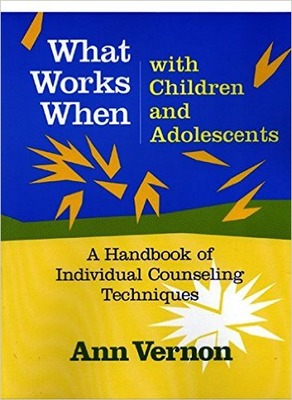
Counseling Children and Adolescents
Ann Vernon
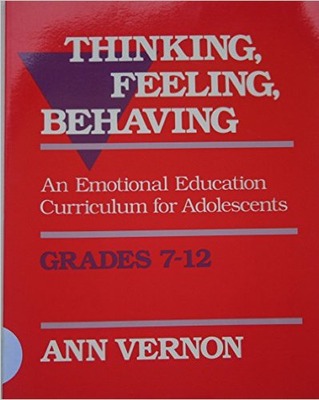
This highly practical new edition of "Counseling Children and Adolescents" combines innovative techniques with solid theory for helping children. It is a developmental approach with major revisions in all chapters. The new chapter on counseling culturally and ethnically diverse youth shows how to develop cultural, ethnic, and racial self-awareness as a counselor. The book offers a plan for designing a developmental counseling curriculum from primary grades through high school. It presents empirically based strategies and shows how to assess needs and design helpful interventions. Play therapy, brief counseling, rational - emotional therapy, small group counseling, working with at-risk youth, and working with parents are all part of this text. The rich experiences of the authors as both practitioners and clinicians, in addition to being counselor educators, bring a wide array of innovations and creative techniques to this new volume. -- Provided by publisher
-
Everything Paid For
Robley Wilson
Robley Wilson’s third book of poems is written in a delightful variety of forms--syllabics, couplets, nonce sonnets, internal rhymes, and a marvelously supple blank verse. His concerns are the age-old concerns of being human: the difficulty of loving and communicating, the maddening challenges of living a "normal" life in suburbia, the ripple effect of our every act on others. But there is nothing dour in his approach. His tone is often wry and witty, always thoughtful. He digs deep and comes up with poems written from totally unexpected perspectives--the Kent State massacre from the point of view of one of the now-aging National Guardsmen; World War II from the point of view of a German girl chosen to present flowers to General Himmler; or a man living (literally) on the moon. Wilson has published four books of stories, and his gift as a storyteller is apparent in these poems. He sets the scene, gives us the facts--of a life, a mood, a moment--and we are drawn into the world of each separate poem. "Judge not . . ." is implicit, and we see ourselves in these poems and learn about ourselves as we read. Robley Wilson, editor of the North American Review, is professor of English at the University of Northern Iowa in Cedar Falls. He has published two previous books of poetry, Kingdoms of the Ordinary (1987) and A Pleasure Tree (1991). -- Provided by publisher
-

Iowa's Geological Past: Three Billion Years of Earth History
Wayne I. Anderson
Iowa's rock record is the product of more than three billion years of geological processes. The state endured multiple episodes of continental glaciation during the Pleistocene Ice Age, and the last glacier retreated from Iowa a mere (geologically speaking) twelve thousand years ago. Prior to that, dozens of seas came and went, leaving behind limestone beds with rich fossil records. Lush coal swamps, salty lagoons, briny basins, enormous alluvial plains, ancient rifts, and rugged Precambrian mountain belts all left their mark. In Iowa's Geological Past, Wayne Anderson gives us an up-to-date and well-informed account of the state's vast geological history from the Precambrian through the end of the Great Ice Age. Anderson takes us on a journey backward into time to explore Iowa's rock-and-sediment record. In the distant past, prehistoric Iowa was covered with shallow seas; coniferous forests flourished in areas beyond the continental glaciers; and a wide variety of animals existed, including mastodon, mammoth, musk ox, giant beaver, camel, and giant sloth. The presence of humans can be traced back to the Paleo-Indian interval, 9,500 to 7,500 years ago. Iowa in Paleozoic time experienced numerous coastal plain and shallow marine environments. Early in the Precambrian, Iowa was part of ancient mountain belts in which granite and other rocks were formed well below the earth's surface. The hills and valleys of the Hawkeye State are not everlasting when viewed from the perspective of geologic time. Overall, Iowa's geologic column records an extraordinary transformation over more than three billion years. Wayne Anderson's profusely illustrated volume provides a comprehensive and accessible survey of the state's remarkable geological past. -- Provided by publisher
-
Leisure Programming: A Service-Centered and Benefits Approach
Christopher R. Edginton, Carole J. Hanson, Susan Edginton, and Susan D. Hudson
This comprehensive text addresses all three levels of leisure programming: direct service delivery,program planning,and program management. It focuses on issues related to customer service and benefits-such as providing leisure experiences,assessing customer needs,evaluating program impact,promoting positive customer and leader interactions,analyzing and implementing policies,and supervising staff. -- Provided by publisher
-
Leisure and Life Satisfaction: Foundational Perspectives
Christopher R. Edginton, Debra J. Jordan, Donald G. DeGraaf, and Susan Edginton
-
Sex and Citizenship in Antebellum America
Nancy Isenberg
With this book, Nancy Isenberg illuminates the origins of the women's rights movement. Rather than herald the singular achievements of the 1848 Seneca Falls convention, she examines the confluence of events and ideas--before and after 1848--that, in her view, marked the real birth of feminism. Drawing on a wide range of sources, she demonstrates that women's rights activists of the antebellum era crafted a coherent feminist critique of church, state, and family. In addition, Isenberg shows, they developed a rich theoretical tradition that influenced not only subsequent strains of feminist thought but also ideas about the nature of citizenship and rights more generally. By focusing on rights discourse and political theory, Isenberg moves beyond a narrow focus on suffrage. Democracy was in the process of being redefined in antebellum America by controversies over such volatile topics as fugitive slave laws, temperance, Sabbath laws, capital punishment, prostitution, the Mexican War, married women's property rights, and labor reform--all of which raised significant legal and constitutional questions. These pressing concerns, debated in women's rights conventions and the popular press, were inseparable from the gendered meaning of nineteenth-century citizenship. -- Provided by publisher
-

Schooling Children with Down Syndrome: Toward an Understanding of Possibility
Christopher Kliewer
This volume explores Down syndrome disability in the cultural context of the school. The author traces the history of community banishment on people with Down syndrome. Based on fieldwork, and using examples, the author describes school contexts currently resisting traditions of segregation. -- Provided by publisher
-
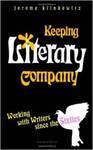
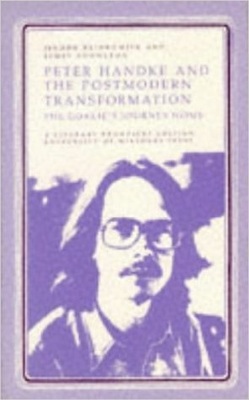
Keeping Literary Company: Working with Writers Since the Sixties
Jerome Klinkowitz
Starting in the 1960s, a group of radically new fiction writers began having success at reinventing the novel and short story for postmodern times. These writers found an ally in a young reader named Jerome Klinkowitz. Beginning in 1969 he published the first scholarly essays on Vonnegut, Kosinski, Barthelme, and the others in turn. Keeping Literary Company details Klinkowitz's work with these writers - not just researching their fiction and other publications, but introducing them to one another and taking part in the business-world activities that spread news of their innovations. He shows how what they wrote was so much a part of those turbulent times that a new literary generation found itself defined in such works as Slaughterhouse-Five, Being There, and Snow White. Here is a fascinating first-person account of what these important figures wrote, how they wrote it, and what it means in the development of American fiction. -- Provided by publisher
-
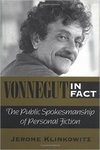
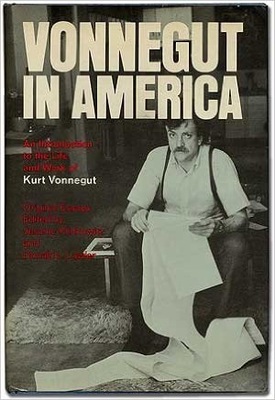
Vonnegut in Fact: The Public Spokesmanship of Personal Fiction
Jerome Klinkowitz
In this volume, Jerome Klinkowitz traces the emergence of Vonnegut's nonfiction since the 1960s, when commentary and feature journalism replaced his rapidly dying short-story market. Offering close readings and insightful criticism of Vonnegut's three major works of nonfiction, his many uncollected pieces, and his unique manner of public speaking, Klinkowitz explains how Vonnegut's personal visions developed into a style of great public responsibility that mirrored the growth of his fiction. The investigation of the writer's extensive nonfiction provides a key to understanding his distinctively inventive novels and the manner in which his public spokesmanship influenced his artistic expression. -- Provided by publisher
-
Quality Problem Solving
Gerald F. Smith
An in-depth and comprehensive reference, this text offers problem solving insights and prescriptions for those trying to solve complex, real-world quality problems. -- Provided by Publisher
-
The Wonderful World of Mathematics: A Critically Annotated List of Children's Books in Mathematics
Diane Thiessen, Margaret Matthias, and Jacqueline Smith
This annotated list of more than 550 titles analyses each book's content and accuracy, illustrations, style and any included activities. Highlights include a new section titled "Series and Other Resources" to accommodate the large number of books that have been issued in series, as well as a new subsection called "Incidental Geometry-Quilting," which lists books that help students make connections among geometry, history and quilting. -- Provided by Publisher
-
Water Resource Management: A Comparative Perspective
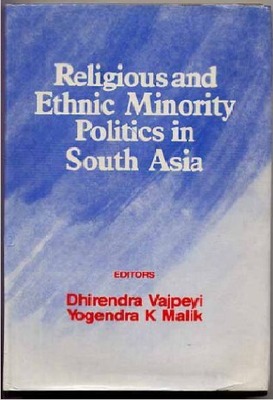
Dhirendra K. Vajpeyi
According to available estimates, only .3% of the total fresh water is usable for the world's entire human and animal populations. Some experts have observed that in the near future, the earth will face severe scarcity of water, resulting in an insufficient amount of water to sustain our ever increasing future needs. Others believe that such pessimistic estimates are unwarranted.
Due to conflicting opinions and data-interpretations, the future levels of scarcity are difficult to accurately forecast. One fact, however, is above controversy: water resources are not evenly distributed. The world's 38 poorest countries are located near areas that lack ample water supplies. Even some areas, which seem to possess sufficient supplies, suffer zonal or regional shortages. In recent years there has been an increasing realization not only of the importance of water as a key factor for sustainable development, but also the impending strategies for water in the near future. The chapters in this collection examine this critical resource and the policies being pursued to meet the challenge of decreasing access to usable water by selected countries in Asia, Africa, Latin America, and Europe. A major study for students, researchers, and policymakers involved with environmental and development issues. -- Provided by publisher -
U.S. Department of Transportation: A Reference History
Donald Robert Whitnah
Tracing the antecedents and the creation of the U.S. Department of Transportation, this work assesses its role in both the control of transportation and the encouragement of big businesses in the industry. The U.S. government has struggled for over a century with the complex issue of transportation regulation. The prevailing view from the 1880s until recently was to consider private transportation a public utility, which led to the creation of the DOT in 1966. This work covers much of the regulation/deregulation debates from Hoover to the Nixon presidencies, and focuses on the bipartisan crescendo for deregulation led by Gerald Ford and Edward Kennedy. Whitnah also analyzes the heated debate over airline deregulation that resumed in the Carter years and continues to have an impact today. -- Provided by publisher
-
The Peruvian Labyrinth: Polity, Society, Economy
Maxwell A. Cameron and Philip Mauceri
A country perceived as having unusually complex political, economic, and social problems, Peru has long fascinated social scientists. The Peruvian Labyrinth brings together a new generation of scholars to explore the multifaceted Peruvian 'experiment' as it has evolved further, in often dramatic ways, in the 1980s and 1990s.The volume focuses special attention on the administration of Albert Fujimori, who suspended the constitution in 1992, two years after he first became president, but then was reelected in 1995. The experience of Peru under his regime raises important questions about the nature of democracy in Latin America, the challenges of economic and political reofrm, and the prospects for combining stable democratic goverance and sustained development.Topics covered in the volume include the legacies of democratic transistions, human rights and political violence, the decline of the Shining Path, the Fujimori 'autogolpe,' the changing roles of business and organized labor, the political impact of the informal sectorm changes in the agrarian sector, and the shift in economic strategies from the deveopmentalism and toward neoliberalism. -- Provided by publisher
-
When a Crisis Hits: Will Your School Be Ready?
Robert Decker
The author includes surveys, checklists, and other assessment tools help you determine your school's preparedness for an emergency. You'll find over 30 examples of different types of plans that cover such occurrences as bomb threats, fires, floods, kidnappings, shooting, suicides, and tornadoes. -- Provided by publisher
-

Building New York's Sewers: Developing Mechanisms of Urban Management
Joanne A. Goldman
This wide-ranging study offers a unique perspective to examine the conditions, constraints, and concerns of city government during the first half of the nineteenth century. Decisions concerning wastewater disposal in New York City reflect nineteenth-century notions of disease, the environment, and city responsibility. The decision to construct a comprehensive sewer system was a complex one that pitted individual liberty against the common good and political considerations against those of professional physicians and engineers. This history of policy formation is, then, a story of changing values and ideas that must be understood within the context of the social, economic, political, and intellectual milieu of the middle of the nineteenth century. -- Provided by publisher
-

The Struggle for Student Rights: Tinker V. Des Moines and the 1960s
John W. Johnson
The tension between free speech and social stability has been a central concern throughout American history. In the 1960s that concern reached a fever pitch with the anti-Vietnam War movement. When anti-war sentiment "invaded" American schools, official resolve to retain order in the classroom vied with the rights of students to speak freely. A key event in that face-off was the Supreme Court decision in Tinker v. Des Moines. -- Provided by publisher
-

Odyssey of the Psyche: Jungian Patterns in Joyce's Ulysses
Jean Kimball
The result of the interaction between Bloom and Dedalus, Kimball argues as a central tenet in her unique reading of Ulysses, is the gradual development of a relationship between the two protagonists that parallels C. G. Jung’s descriptions of the encounter between the Ego and the Shadow in that stage of his theoretical individuation process called "the realization of the shadow." These parallels form a unifying strand of meaning that runs throughout this multidimensional novel and is supported by the text and contexts of Ulysses. Kimball has provided the first comprehensive study of the relationship between Jungian psychology and Joyce’s Ulysses. Bucking critical trends, she focuses on Stephen rather than Bloom. She also notes certain parallels—synchronicities—in the lives of both Jung and Joyce, not because the men influenced one another but because they speculated about personality at the same historical time. Finally, noting that both Jung and Joyce came from strong Christian backgrounds, she asserts that the doubleness of the human personality fundamental to Christian theology is carried over into Jung’s psychology and Joyce’s fiction. -- Provided by publisher
-
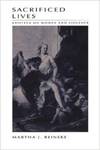
Sacrificed Lives: Kristeva on Women and Violence
Martha J. Reineke
Why did medieval women mystics starve themselves? Why were “witches” hunted, tortured, and killed? Why has the Christian West found maternal figures threatening? To answer these questions, Reineke advances a theory of sacrifice, inspired by Julia Kristeva and René Girard, that attempts to account for women’s special vulnerability to violence in Western culture. -- Provided by publisher
-
Economic Dimensions of Gender Inequality: A Global Perspective
Janet M. Rives and Mahmood Yousefi
This contributed volume explores the status of women in the economies of countries at various developmental stages. Issues covered include, first, evidence of economic and social inequality throughout the world. Second, gender inequality in many societies can be explained by inadequate investment in human capital. Third, by overlooking women's non-market output, countries generally overlook women's economic contributions to a nation. Finally, with economic progress women become healthier as well as better educated and trained. Part I addresses the interaction of economic development and gender inequality, while Part II discusses women in France, Mexico, Nigeria, and Turkey. Part III considers some special concerns facing women. Part I addresses the interaction of economic development and gender inequality. Chapters explore gender inequality in newly industrialized countries, the effects of economic development on employment status in less developed countries in the Western Hemisphere, and the economic development and status of women in South Korea. Part II discusses the economic status of women in France, Mexico, and Nigeria. This section also presents models used to estimate labor force participation and earnings of men and women in Turkey. Part III covers special concerns facing women in several countries, including health issues, the status of women during the economic transition in Poland, the gap between actual and official labor force participation of women in Pakistan, and the impact of social technology on the economic status of women in India. -- Provided by publisher
-
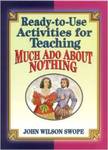
Ready-To-Use Activities for Teaching Much Ado About Nothing
John Wilson Swope
Each volume contains more than 100 classroom-tested whole-language activities ranging from role-playing, response journals, character study, and language exploration. Includes extended activities, reproducible maps, and background information. -- Provided by publisher
-

Social Welfare: A World View
Katherine S. Van Wormer
Dedicated to the world's marginalized people, this exhaustively documented text studies that United States' social welfare system in comparison to international approaches with extensive coverage of the systems in Canada, the United Kingdom, Japan, Mexico, and Norway. This timely offering coincides with social work's growing international commitment, and explores how this concern affects the profession on both individual and policy-making levels. Initially van Wormer describes social work's historical beginnings and then establishes the groundwork for contemporary practice. The text meets CSWE's requirement that the social work curriculum provide content on discrimination, economic deprivation, and oppression and their effects on people of color, women, and gay and lesbian persons. Knowledge of these dynamics will prompt social work students to accept their role as citizens of not just their own countries, but also of the world. -- Provided by publisher
-
Novelistic Love in the Platonic Tradition: Fielding, Faulkner and the Postmodernists
Jennie Wang
The love story is an integral part of many novels. What is its narrative status? How does it function, and why? In this original study of Socratic 'love stories,' from Plato through Fielding and Faulkner to the Postmodernists, Jennie Wang proposes a new narrative theory in the study of the novel, which deconstructs the mimesis of 'love stories' and reconstructs their historicity. Wang claims that in the Platonic tradition, the construction of 'love stories' is often a dramatization of the author's historical vision, philosophical speculations, cultural criticism, or political ideology. Novelistic love functions as a literary medium, a power of free speech, that enables the novelist to speak unspeakable truths and include excluded subjects. -- Provided by publisher