
A Faculty Book Gallery has been developed that showcases the book publications authored and edited by faculty and staff at the University of Northern Iowa. Individual department pages have Faculty Book Galleries that list the books authored and edited by faculty and staff from the particular department.






























































































































































-
Medieval Forms of Argument: Disputation and Debate
Georgiana Donavin, Carol Poster, and Richard Utz
These studies illustrate the various high and late medieval transformations of formal and formalized argument, from a broadly interdisciplinary perspective and it challenges today's dominant disciplinary approaches to what was and is still a pervasive mode of thought in the West. Many current treatments of disputational texts have a narrow focus either on the history of scholasticism, rhetoric, and pedagogy, or the genesis and function of such period-specific forms of academic altercation as demonstrative, dialectic, or sophistic disputation, or the later quaestiones, quodlibeta, and sophismata. Moreover, scholarship in literature often ignores the parallel structures of academic argument and narrowly focuses on the narrative and aesthetic functions of debate poetry. In contrast to these tendencies, the contributions to this volume afford a view which enables readers to recognize that the manifold formalized discursive practices of positing a thesis, constructing a counter antithesis, and then finding a synthesis permeated not only the cathedral schools and universities and their direct textual products (commentaries, formal disputations, sermons, and so forth), but were received by a wide range of other discursive realms. Especially in the high and late Middle Ages the academic disputation gradually moved from the isolation of the universities and toward extracurricular forms of debate between theologians (e.g., the public quaestiones disputatae; epistolary theological debates between Christians and Muslims) and in literary genres (e.g. querelle, debate poem). By confronting sample investigations from all these related forms of medieval argument, the volume examines the ways in which disputational forms - sometimes directly dependent on academic practices, sometimes showing organizational, structural, and discursive parallels - established themselves as a central mode of thinking for Western society. To achieve this goal, the volume unites contributions from the English, French, German, Spanish, Portuguese, and Italian traditions of the disputational mode and discusses central issues of academic, political, theological, courtly and literary debates. -- Provided by publisher
-
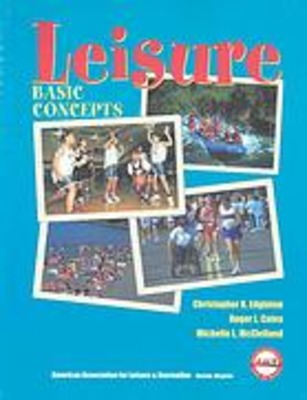
Leisure and Life Satisfaction: Foundational Perspectives
Christopher R. Edginton, Debra J. Jordan, Donald G. DeGraaf, and Susan Edginton
What is life satisfaction? What is the connection between leisure and life satisfaction? Discover the answers to these questions and much more in Leisure and Life Satisfaction: Foundational Perspectives. See how leisure professionals craft environments that hep individuals, groups, and communities achieve a better quality of life and greater happiness and satisfaction. Gain an understanding of the phenomenon of leisure by examining it from its sociological and psychological perspectives. -- Provided by publisher
-
Shelley's Textual Seductions: Plotting Utopia in the Erotic and Political Works
Samuel Lyndon Gladden
-

Organizational Change, Environmental Uncertainty, and Managerial Control in a Large Post-Reform American Prison System
Joe Gorton
This work by Dr. Gorton demonstrates how organizational restructuring centralized control over the managerial process and also provides an in-depth analysis of how a large prison system was restructured in response to rapid growth and increased pressure from outside the organization by civil rights activists practitioners, scholars, and the federal courts. Preface; Many people are fascinated by the dangerous and mysterious world of American prisons. This is not surprising, for contemporary prisons are truly remarkable organizations. Confronted by constantly changing political, cultural and demographic forces, modern prisons are complex organizations that often pursue disjointed goals. On one hand, they administer punitive sanctions against large aggregates of social misfits, many of whom actively resist coercive social control. Making matters more difficult is the requirement that the punitive enterprise comply with ever-changing legal standards that define permissible forms of punishment. On the other hand, most prisons are required to provide services that seek to promote inmates' personal growth. Visit most large prisons and you will discover programs focusing on substance abuse treatment, vocational training, secondary and post-secondary education, domestic violence counseling, psychological treatment, faith-based counseling, and so on. The conflicting goals of treatment and control are complicated by the necessity to safeguard the security of inmates, staff, visitors and the facility itself. Moreover, much of this work is performed by correctional officers whose jobs earn them low salaries and little prestige. Given these complex mandates, it is understandable that social scientists and others have long been interested in prisons. However, even a basic familiarity with the research literature reveals that the most intense focus of this attention has been on prison subcultures. Surprisingly, few scholars have conducted in-depth analyses of prisons as bureaucracies. -- Provided by publisher
-

The Farm as Natural Habitat: Reconnecting Food Systems With Ecosystems
Dana L. Jackson and Laura L. Jackson
The Farm as Natural Habitat is a vital new contribution to the debate about agriculture and its impacts on the land. Arising from the conviction that the agricultural landscape as a whole could be restored to a healthy diversity, the book challenges the notion that the dominant agricultural landscape - bereft of its original vegetation and wildlife and despoiled by chemical runoff - is inevitable if we are to feed ourselves. Contributors bring together insights and practices from the fields of conservation biology, sustainable agriculture, and environmental restoration to link agriculture and biodiversity, farming and nature, in celebrating a unique alternative to conventlonal agriculture. Rejecting the idea that "ecological sacrifice zones" are a necessary part of feeding a hungry world, the book offers compelling examples of an alternative agriculture that can produce not only healthful food, but fully functioning ecosystems and abundant populations of native species. Contributors include Collin Bode, George Boody, Brian DeVore, Arthur (Tex) Hawkins, Buddy Huffaker, Rhonda Janke, Richard Jefferson, Nick Jordan, Cheryl Miller, Heather Robertson, Carol Shennan, Judith Soule, Beth Waterhouse, and others. The Farm as Natural Habitat is both hopeful and visionary, grounded in real examples, and guided by a commitment to healthy land and thriving communities. It is the first book to offer a viable approach to addressing the challenges of protecting and restoring blodiversity on private agricultural land and is essential reading for anyone concerned with issues of land or blodiversity conservation, farming and agriculture, ecological restoration, or the health of rural communities and landscapes.
-

Decision Support Systems: Concepts and Resources for Managers
Daniel J. Power
For MIS specialists and nonspecialists alike, teacher and consultant Dan Power provides a readable, comprehensive, understandable guide to the concepts and applications of decision support systems. Not only does his book help enhance your DSS design and development capabilities, it also shows how DSS can buttress organization goals and the impact DSS have throughout organizations and at all levels of management. Power defines DSS broadly: interactive computer-based systems and subsystems that help people use computer communications, data, documents, knowledge, and models to solve problems and make decisions. He focuses his book on practical applications, but also includes important and relevant empirical research and underlying theory. His book thus provides enough concrete detail to help grasp the essentials of DSS, but it also gives advanced tips and suggestions to DSS specialists too. For people trained in fields outside the information sciences, Power's book is especially valuable. It gives them the knowledge they need to work with their MIS colleagues and to truly appreciate the management value of information technology overall.
Power makes clear that decision support systems differ and that managers must specify what they want, based on their needs and the purposes to which the systems will be put. They should know how to build DSS and understand the basics of networking, security, and web-based DSS. Thus, of special interest is the structure that Power uses to organize his book. In Chapter 1 he presents an expanded framework for categorizing DSS. Chapters 2-5 provide a general managerial and technical perspective on building DSS. In Chapters 7 through 11 he lays out the details and gives examples of the general types of DSS. The last chapter, Evaluating Decision Support System Projects, reviews and discusses the tools and issues associated with assessing proposals for DSS projects. The book also includes a glossary and DSS audit questions, giving it special, ongoing value to all readers. -- Provided by publisher
-
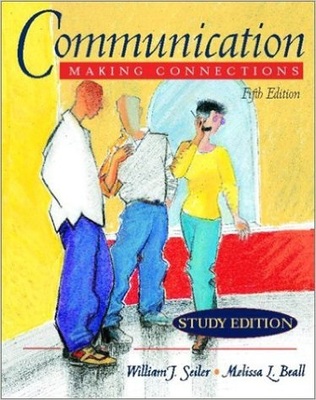
Communication: Making Connections
William J. Seiler and Melissa L. Beall
Designed to give your students the extra support they need to succeed in your classroom, our Study Edition of Seiler/Beall's Communication: Making Connections, Fifth Edition, offers perforated chapter practice tests at the end of the textbook, an optional Practice Test Solutions Manual with access to professional tutoring, and an Instructor's Answer Key with solutions and ready-made midterm and final exams. Containing the same engaging and effective features that have made Communication: Making Connections such a success, the Study Edition offers an additional bonus: perforated chapter quizzes at no extra cost to students. Because the answers to the practice tests are not included in the Study Edition, instructors can use the tests as quizzes or as extra homework. If instructors prefer to give students the option of checking their own results, they can package the Study Edition with our Practice Test Solutions Manual for FREE. Also included FREE with this option is our Tutor Center Access Card to provide students with extra study support from our qualified Tutor Center professionals by phone, fax, e-mail, and the Internet. With either ordering option, students get a valuable and effective study system not found in other books! The text authors, experienced in the teaching and management of the basic communication course, believe that communication is about connecting, linking, sharing, participating, bonding, coupling, or joining with others. This text uses student-oriented scenarios, exercises and examples, as well as the authors' conversational style, to draw students into the book and motivate them to learn and understand the basic principles of communication. An integrated emphasis on technology-both in the text itself and in the supplements package-helps students learn about its relationship to communication. -- Provided by publisher
-
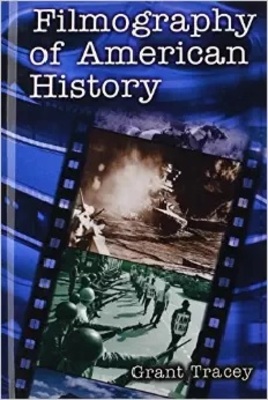
Filmography of American History
Grant A. Tracey
Containing over 200 films, this resource is ideal for students, teachers, and other viewers who are interested in using films to enhance their knowledge of American historical events and periods. Along with traditional historical categories, such as the two World Wars, the Civil War, and the Great Depression, the book emphasizes immigrant, multicultural, and women-centered films to portray the fullness of the American experience. It also analyzes representations of people and events across different films for a variety of viewpoints, and considers how films reconfigure a past era through the issues of the day in which they were produced.
For ease of use, the book is organized into time periods. Each entry contains:
-- the setting
-- director
-- cast
-- credits
-- the year of production
-- distributor
Ratings are supplied to identify audience-appropriateness. The detailed narrative supplies a brief plot summary along with a thesis supported by strong examples from the film, such as excerpts of dialogue and factual details from history. The entries encourage readers to view the film through the lens of history and to consider it within the larger nexus of films listed in that particular chapter. Frequently, the historical focus considers both the time period depicted in the film and the time period in which it was made. The running times provide readers with a quick access to key scenes for further study. Each entry also concludes with sources for further reading, and indexes identify those films with multicultural and women's themes. -- Provided by publisher
-
Chaucer and the Discourse of German Philology: A History of Reception and an Annotated Bibliography of Studies, 1793-1948
Richard Utz
In her magisterial study, Five Hundred Years of Chaucer Criticism and Allusion, 1357-1900, Caroline Spurgeon stated that 'The work done on Chaucer by scholars in modern Germany is so vast that it would need a volume to itself to deal adequately with it'. This study fills this scholarly desideratum by surveying the genesis and development of the largest body of non-Anglophone Chaucer criticism from the beginning of the nineteenth century to 1945. Such a history of Chaucer reception mirrors the general cultural and political developments in Germany and in German academia from the revolutionary and liberal Chaucer of the 'Vormaerz' (pre-March 1848) period, the conservative Chaucer of the post-1848 restoration, the 'Germanization' of Chaucer after the country's formation as a nation state (1871), the demise of German Chaucer studies after World War I and during the Weimar Republic, the ideological utilization of Chaucer during the Third Reich, to the sporadic Chaucer criticism after 1945. A strong focus will be upon the 'Chaucerphilologie' (1870-1914) when philological positivism evolved and triumphed, and how even today positivism and philological source study and editorial work is esteemed above 'foreign' (non-German) scholars who engage in aestheticist, essayistic and hence 'unscientific' approaches. The study follows German Chaucer criticism in a largely chronological manner, with biographies of key scholars (Ten Brink, Koch, Zupitza) and studies of specific philological feuds (Lange vs. Langhans on the authenticity of Chaucer's translation of the Roman de la Rose; Curtius vs. Glunz on the superiority of philology over literary aesthetics). The investigation is based on the theories of Anglo-American 'Medievalism' (and 'New' Medievalism/Philology) and its German sibling 'Mittelalter-Rezeption', the reception theories of Iser, Jauss and Fish, and discourse theories of Foucault. -- Provided by publisher
-
What Works When with Children and Adolescents: A Handbook of Individual Counseling Techniques
Ann Vernon
This practical handbook is designed for counselors, social workers, and psychologists in schools and mental health settings. It offers over 100 creative activities and effective interventions for individual counseling with children and adolescents (ages 6-18). The activities include stories, songs, games, worksheets, role plays, and other strategies that address problems, such as anger, anxiety/worry, depression, underachievement, procrastination, perfectionism, self-downing, and acting out. The interventions, which are based on the principles of rational emotive behavior therapy, can be used for helping students with normal developmental issues as well as for helping those with more serious emotional or behavioral problems. Dr. Vernon provides strategies for establishing a therapeutic relationship with students who are sometimes apprehensive or opposed to counseling. Several case studies are included to help illustrate the counseling techniques and interventions. The book also includes a chapter on working with parents and teachers. -- Provided by publisher
-
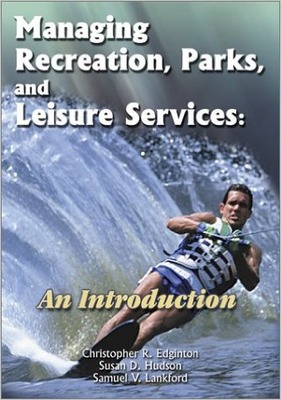
Managing Recreation, Parks, and Leisure Services : An Introduction
Christopher R. Edginton, Susan Hudson, and Sam Lankford
It has been over twenty years since the first edition of Productive Management of Leisure Service Organizations was conceptualized, written, and published. Now in its second edition, Managing Recreation, Park, and Leisure Services considers three critical changes in the leisure service field: technology and information resolution; nature of the workforce; and the basic revision of our economy. These changes have made a great impact on the management of human resources, which is the main focus of this book. - Provided by publisher
-
Who Speaks for the Poor?: National Interest Groups and Social Policy
R. Allen Hays
This book addresses the central question of how the interests of the poor gain representation in the political process by examining the interest group system. -- Provided by publisher
-
You've Got to Be Carefully Taught: Learning and Relearning Literature
Jerome Klinkowitz
Drawing on his own experience in the profession, veteran English professor and internationally renowned scholar Jerome Klinkowitz sorts out the wrong ways of teaching literature before devising a new, successful method. Specifically, he concludes that a historically based “story of English” is precisely the wrong narrative approach to making sense of what literature does. Instead, Klinkowitz proposes a new method focused not on the product of literary writing but on the process of writing. Long involved with the making of contemporary literature, Klinkowitz shows how his classroom approach draws on the same strengths and inspirations writers use in the creation of literature. He involves students in the literary work as production.
Despite almost universal agreement that literary studies fail both writers and students, solutions have been limited to suggestions by superstar theorists teaching cream-of-the-crop students at elite universities. Klinkowitz aims not at the elite but at the ordinary student in an introduction to literature class. His goal is to introduce teachers to a new philosophy of teaching literature and to further deepen students’ natural love for the subject. He also seeks to revive the love of fine writing in those whose joy in the subject fell victim to obtuse teaching methods. Uniquely, his is not an esoteric theory developed by the best academics for elite students but a commonsense approach that works well in the kind of schools most students attend. -- Provided by publisher -
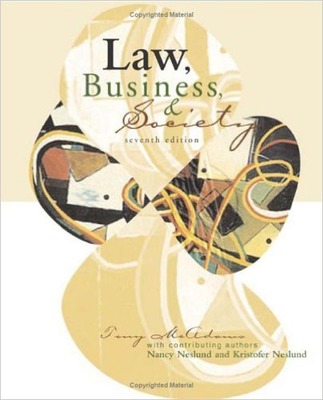
Law, Business, and Society
Tony McAdams, James Freeman, and Laura Pincus Hartman
Taking an interdisciplinary approach, this text utilizes elements of law, political economy, international business, ethics, social responsibility and management. It aims to produce a holistic picture of the concepts by giving attention to readings, quotes and factual details. -- Provided by publisher
-
Northern Naval Superiority and the Economics of the American Civil War
David G. Surdam
Addressing an aspect of the Civil War that has long been a source of controversy among historians, David G. Surdam offers an unconventional analysis of the Union's naval blockade. He questions common methods of evaluating the strength of the 3,500-mile siege line, disputes widely held interpretations of its impact, and explores previously unexamined aspects of the blockade as he presents a case for the effectiveness of the Union naval effort. Surdam seeks to explain the failure of the Confederacy to wage war and sustain independence despite an apparently sufficient supply of raw cotton to trade with Europe and Canada for war materiel and enough beef and corn to feed its troops. To do so he expands the traditional approach to the blockade, finding that a focus on the number of goods that slipped past Union ships overlooks two of the blockade's most important achievements: disrupting intraregional trade and denying the Confederacy badly needed revenue from the export of raw cotton and other staple products. Explicating the blockade's indirect yet devastating results, Surdam examines the degradation of railroad lines, collapse of specific internal markets, and effect on the exportation of cotton. He also explores how the blockade affected the cross-country movement of crops to hungry soldiers and civilians and how costs associated with the blockade consumed most of the higher prices that Europeans paid for Southern cotton. -- Provided by publisher
-
Deforestation, Environment, and Sustainable Development: A Comparative Analysis
Dhirendra Kumar Vajpeyi
According to available estimates, forests cover more than one quarter of the world's total area. About sixty percent of these forests are situated in tropical countries. However, these forests are disappearing at a very fast pace. Between 1980 and 1995, an area larger than Mexico had been deforested. This accelerated destruction of forests poses a serious threat to the environmental and economic well-being of the earth. Several studies have demonstrated that natural forests are the single most important repository of terrestrial biological diversity--of ecosystems, species, and genetic resources. Forests also act as major carbon sinks, absorbing massive quantities of carbon dioxide from the atmosphere. Deforestation, according to these studies, is directly linked to adverse climate change, soil erosion, desertification, and water cycling. Until recently deforestation was deemed to be a local/national problem. However, increased awareness and scientific data have pointed out that the problem transcends national boundaries. Deforestation affects the entire earth's environment and economic development.
This collection of essays analyzes the forces responsible for deforestation, the governmental policies that effect this destruction and the roles multilateral aid agencies, NGOs, play in the environmental debate. The collection critically examines the principles and criteria suggested by forest-experts for a sustained economic growth vis-á-vis forest stewardship in Latin America, Asia, Africa, and the Middle East. An invaluable resource for scholars, students, researchers, and policymakers involved with environmental and public policy issues. -- Provided by publisher -
Counseling Female Offenders And Victims: A Strengths-restorative Approach
Katherine S. Van Wormer
Establishes a link between the crimes of female offenders and environmental factors such as substance abuse and sexual abuse. Combines strategies from the fields of criminal justice and social work to show how to empower female offenders and rehabilitate them. Uses a 'strengths-restorative' approach. For counselors and students. -- Provided by publisher
-

An Intertextual Study of the Psalms of Solomon: Pseudepigrapha
Kenneth Atkinson
This is a study of the Psalms of Solomon, which were composed between 63-37 BC as a series of reflections on the violence that accompanied the Roman dominance of Palestine. -- Provided by publisher
-

Face of the Earth, Heart of the Sky
Mario Roberto Morales and Edward Waters Hood
Face of the Earth, Heart of the Sky is a novel that accurately depicts the horrors of the Guatemalan civil war fought out in the 1980s. In these pages we encounter the distinct voices of the elderly, the children, and the men and women whose stories from the Left and from the Right which Mario Morales collected and then wove together in this articulate, powerful, candid, vividly recounted, memorable work. -- Provided by publisher
-

University of Northern Iowa, from the College History Series
Gerald L. Peterson
The University of Northern Iowa has evolved from its humble beginnings in 1876 as a normal school with 27 students to a thriving educational community with a student body of over 13,000. But as this pictorial history vividly depicts, its founding principles have remained the same: a commitment to high-quality education, an impressive teaching staff, and eager students with a desire to learn. Originally established in a former home for the orphans of Iowa's Civil War veterans, the University of Northern Iowa has matured from a small teacher's college to the university which is internationally known today. Inspired leadership from university presidents helped bridge this transition, and to give guidance to an institution deeply affected by the Great Depression, emerging only to face new challenges brought on by World War II. WAVES and US Army Air Corps personnel trained here, and GIs were educated upon their return from service. Civil Rights, the anti-war movement, and the technology revolution all helped shape the university into the excellent institution it is today. -- Provided by publisher
-
Social Work with Lesbians, Gays, and Bisexuals: A Strengths Perspective
Katherine S. Van Wormer, Joel Wells, and Mary Boes
This book joins the strengths approach with an overview of social work practice with an oppressed population. A strengths approach provides a skills framework that can be used with any vulnerable or oppressed group. The book speaks directly to the reader through illustrations and boxes written by undergraduate students, as well as a wealth of case examples provided by experienced family counselors. -- Provided by publisher
-
Modern Carpentry: Building Construction Details in Easy-to-Understand Form
Willis H. Wagner and Howard Bud Smith
Modern Carpentry is a colorful, easy-to-understand source of authoritative and up-to-date information on building materials and construction methods. The text provides detailed coverage of all aspects of light frame construction, including site preparation and layout; foundations; framing; sheathing; roofing; windows and doors; exterior finish; stairs; cabinetwork and interior wall, floor, and ceiling finish. Special emphasis is placed on the use of the latest tools, materials, and prefabricated components. -- Provided by publisher
-
Policing in America
Clemens Bartollas and Larry D. Hahn
From Mark Fuhrman to the Rodney King incident, the image of the rogue cop is embedded in the minds of many American citizens. The high profile of police deviancy in the media has provided the public with an overwhelmingly negative image of police integrity. In this book, readers are given a glimpse at the other side of this image and the inner stresses and truths about policing in America. Written by an experienced author (Bartollas) and a practitioner (Hahn), this book brings together an ideal mix of the academic and the practical in an intriguing and comprehensive overview of the state of policing today. Human interest stories interspersed between the discussion of such important topics as police stress, police corruption, excessive and deadly force, constitutional law, and suspect's rights add to the readability of this informative book. In every chapter, there is an effort to place the role and functions of the police in context, whether it is historical, sociocultural, legal, political, or economic. This wide range of contexts provides readers with a complete picture of policing as it relates to various aspects of daily life. Law enforcement officers, students of law enforcement, and anyone else interested in the current state of policing today. -- Provided by publisher
-
Leadership in Recreation and Leisure Service Organizations
Christopher R. Edginton, Susan D. Hudson, and Phyllis M. Ford
-
Schoolwide and Classroom Management: The Reflective Educator-Leader
Leonard A. Froyen and Annette M. Iverson
Key Benefit: With an emphasis on Ecological theory, while incorporating the principles of Positive Behavior Support, and Problem-Solving/Functional Behavioral Assessment, this book addresses classroom management theory and strategies for three age groups: early childhood, middle school, and secondary school. As in prior editions, the goal of this book is to broaden and deepen future teachers' understanding of the behavioral problems they are likely to encounter, as well as the solutions they are likely to find effective. Key Topics: Current trends in education are thoroughly explored and analyzed; and, research-based strategies are drawn from the full spectrum of management styles: behavioral, cognitive behavioral, social learning, and humanistic. Market: For future teachers of pre, middle, and secondary school students in tomorrow's classrooms. -- Provided by publisher
-

Galileo's Planet: Observing Jupiter Before Photography
Thomas A. Hockey
Since the earliest times one of the brightest lights in the heavens has been that of Jupiter, mythical king of the gods and the largest planet in the solar system. It was only natural that peoples from the dawn of history would be interested in such a planet and, indeed, Jupiter was one of the first objects to be observed with the telescope. Even today Jupiter captures the public interest like no other planet: a vast gaseous world, home to violent storms (larger than the Earth) that have raged for centuries. Galileo's Planet: Observing Jupiter before Photography presents the history of humankind's quest to understand the giant planet in the era before photography, a time when the only way to observe the universe was with the human eye. The book provides a comprehensive and fascinating account of the people involved in this quest, their observations, and the results of their findings. Many of the planetary features studied in detail by today's space probes were once glimpsed by keen-eyed, amateur astronomers. These Earth-bound explorers made up for their modest instruments and viewing conditions with their patience, perseverance, and passion for the night sky. Their greatest challenge was the fifth planet from the Sun and the search for its imagined surface-a revelation of the "real Jupiter." In the process, these part-time observers redefined the meaning of the word "planet." The book recounts their story from the earliest times right up until the invention of the camera. -- Provided by publisher