

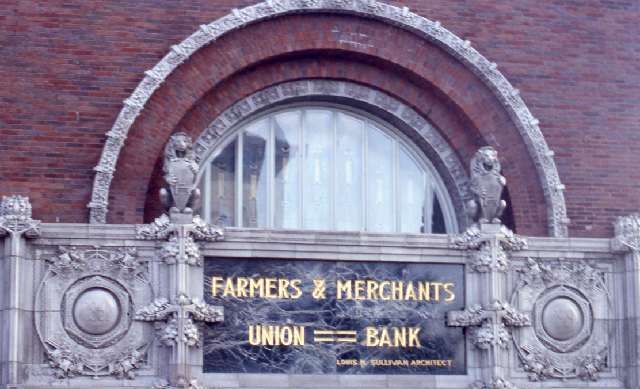
Louis H. Sullivan Structures Image Gallery
Louis H. Sullivan (1856-1924) was an American architect, critic, and mentor, and has been called a "father of skyscrapers" and "father of modernism". He was an influential architect of the Chicago school, a mentor to Frank Lloyd Wright, and an inspiration to the Chicago group of architects who have come to be known as the Prairie School. From the globally recognized phrase "form ever follows function" to the mentorship of a young Frank Lloyd Wright, Sullivan's influence set in motion some of the most important ideas in modern architecture. Carl L. Thurman, a biology professor at the University of Northern Iowa, compiled a collection of approximately 140 photographs of Louis H. Sullivan structures. All photographs were taken by Carl L. Thurman who has designated a Creative Commons 4.0 attribution license to each photo. This license lets others distribute, remix, tweak, and build upon the original work as long as they credit Carl L. Thurman for the original creation. The photographs are arranged by state and then by a local inventory number. Credit: Project Editor - Ellen Neuhaus, Associate Professor & Digital Scholarship Librarian [Significant editorial contributions were made as well as the verification of all images of the structures. In addition, research was done into the background of structures and their locations.] Related collections by Carl L. Thurman in UNI ScholarWorks:
- Fiddler Crabs Image Gallery
- Frank Lloyd Wright Structures Image Gallery
- Mexican Pre-Hispanic Sites Image Gallery
- Prairie School Structures Image Gallery
Arrangement of Images
To browse all of the images, see the entries listed below, which are arranged by state and then by city where the structure is located. OR Click on one of the subgroups to view images related to the specific sub-collection (state or "jewel box" category). Sub-Collections are arranged alphabetically in rows. Sub-Collections:| Iowa | Illinois | Indiana | |
| Minnesota | Missouri | New York | |
| Ohio | Wisconsin | Wisconsin | "Jewel Box" Banks |
-
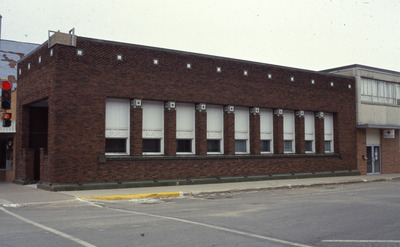
![[IA, Algona. 29] Henry C. Adams Building. 01 by Carl L. Thurman](https://scholarworks.uni.edu/sullivan_images/1095/thumbnail.jpg "[IA, Algona. 29] Henry C. Adams Building. 01 by Carl L. Thurman")
[IA, Algona. 29] Henry C. Adams Building. 01
1998
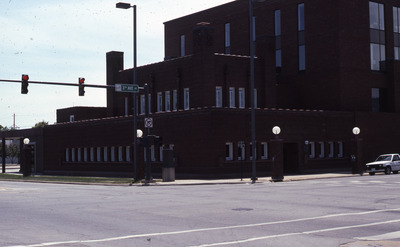
Alt Text: Long, narrow red brick municipal building sits in front of a city street. Nine windows flank the side of the building. Color image
The Henry Adams Building, also known as the Land and Loan Office Building, is a historic building in Algona, Iowa, United States. It was designed by Louis Sullivan in 1912 and built in 1913.
-
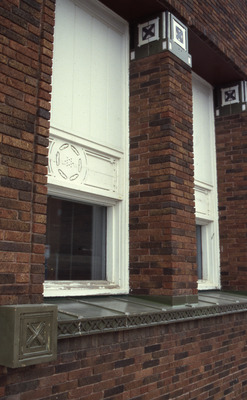
![[IA, Algona. 29] Henry C. Adams Building. 02 by Carl L. Thurman](https://scholarworks.uni.edu/sullivan_images/1096/thumbnail.jpg "[IA, Algona. 29] Henry C. Adams Building. 02 by Carl L. Thurman")
[IA, Algona. 29] Henry C. Adams Building. 02
1998
Alt Text: Close-up of two red brick building window openings that have been retrofitted with white wood and smaller windows at the bottom. Color image
The Henry Adams Building, also known as the Land and Loan Office Building, is a historic building in Algona, Iowa, United States. It was designed by Louis Sullivan in 1912 and built in 1913.
-
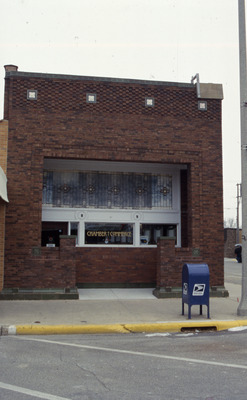
![[IA, Algona. 29] Henry C. Adams Building. 03 by Carl L. Thurman](https://scholarworks.uni.edu/sullivan_images/1097/thumbnail.jpg "[IA, Algona. 29] Henry C. Adams Building. 03 by Carl L. Thurman")
[IA, Algona. 29] Henry C. Adams Building. 03
1998
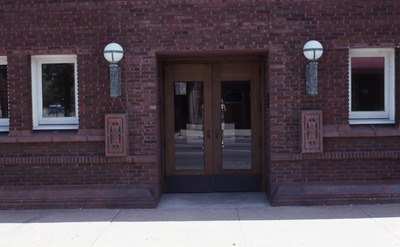
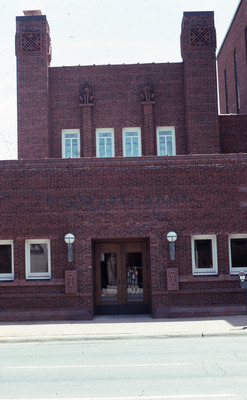
Alt Text: Front entrance of Chamber of Commerce, red brick building trimmed in white wood with a large stained glass window above the entrance. Color image.
The Henry Adams Building, also known as the Land and Loan Office Building, is a historic building in Algona, Iowa, United States. It was designed by Louis Sullivan in 1912 and built in 1913.
-
![[IA, Algona. 29] Henry C. Adams Building. 04 by Carl L. Thurman](https://scholarworks.uni.edu/sullivan_images/1098/thumbnail.jpg "[IA, Algona. 29] Henry C. Adams Building. 04 by Carl L. Thurman")
[IA, Algona. 29] Henry C. Adams Building. 04
1998
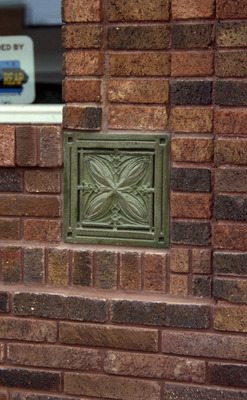
Alt Text: Close-up of red brick building window rosette applique made of green metal. Color image.
The Henry Adams Building, also known as the Land and Loan Office Building, is a historic building in Algona, Iowa, United States. It was designed by Louis Sullivan in 1912 and built in 1913.
-
![[IA, Cedar Rapids. 30] Peoples Saving Bank. 01 by Carl L. Thurman](https://scholarworks.uni.edu/sullivan_images/1099/thumbnail.jpg "[IA, Cedar Rapids. 30] Peoples Saving Bank. 01 by Carl L. Thurman")
[IA, Cedar Rapids. 30] Peoples Saving Bank. 01
1992
Alt Text: 1.5 story municipal brick building with many windows in uniform spacing surround the building. On the second floor, long narrow stained glass windows sit inside white casings. Four pillars top the four corners of the second story. Color image.
The Peoples Savings Bank in Cedar Rapids, Iowa, was designed by Louis Sullivan. It was the second of a number of small "jewel box" banks in Midwest towns designed by Sullivan during 1907 to 1919. The bank was built in 1911.
-
![[IA, Cedar Rapids. 30] Peoples Saving Bank. 02 by Carl L. Thurman](https://scholarworks.uni.edu/sullivan_images/1100/thumbnail.jpg "[IA, Cedar Rapids. 30] Peoples Saving Bank. 02 by Carl L. Thurman")
[IA, Cedar Rapids. 30] Peoples Saving Bank. 02
1992
Alt Text: Close-up of the entrance of a red brick municipal building with double glass doors, exterior globe lights, and small, white windows on either side of the door.
The Peoples Savings Bank in Cedar Rapids, Iowa, was designed by Louis Sullivan. It was the second of a number of small "jewel box" banks in Midwest towns designed by Sullivan during 1907 to 1919. The bank was built in 1911.
-
![[IA, Cedar Rapids. 30] Peoples Saving Bank. 03 by Carl L. Thurman](https://scholarworks.uni.edu/sullivan_images/1101/thumbnail.jpg "[IA, Cedar Rapids. 30] Peoples Saving Bank. 03 by Carl L. Thurman")
[IA, Cedar Rapids. 30] Peoples Saving Bank. 03
1992
Alt Text: Entrance of a red brick municipal building with double glass doors, exterior globe lights, and small white windows on either side of the entrance. Second floor view shows four stained glass windows with Color image.
The Peoples Savings Bank in Cedar Rapids, Iowa, was designed by Louis Sullivan. It was the second of a number of small "jewel box" banks in Midwest towns designed by Sullivan during 1907 to 1919. The bank was built in 1911.
-
![[IA, Cedar Rapids. 30] Peoples Saving Bank. 04 by Carl L. Thurman](https://scholarworks.uni.edu/sullivan_images/1102/thumbnail.jpg "[IA, Cedar Rapids. 30] Peoples Saving Bank. 04 by Carl L. Thurman")
[IA, Cedar Rapids. 30] Peoples Saving Bank. 04
1992
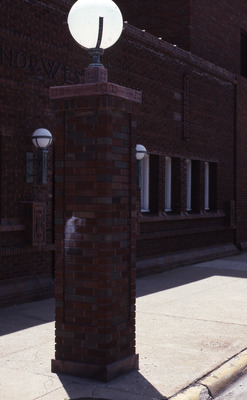
Alt Text: Red brick lamppost with a white globe light at the top stands on a sidewalk outside of a red brick municipal building. Color image.
The Peoples Savings Bank in Cedar Rapids, Iowa, was designed by Louis Sullivan. It was the second of a number of small "jewel box" banks in Midwest towns designed by Sullivan during 1907 to 1919. The bank was built in 1911.
-
![[IA, Cedar Rapids. 30] Peoples Saving Bank. 05 by Carl L. Thurman](https://scholarworks.uni.edu/sullivan_images/1103/thumbnail.jpg "[IA, Cedar Rapids. 30] Peoples Saving Bank. 05 by Carl L. Thurman")
[IA, Cedar Rapids. 30] Peoples Saving Bank. 05
1992
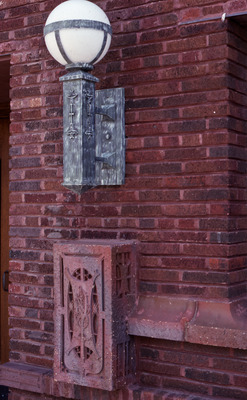
Alt Text: Gray stone exterior sconce light with white globe attached to red brick building. Carved decorative stone sits directly below the light
The Peoples Savings Bank in Cedar Rapids, Iowa, was designed by Louis Sullivan. It was the second of a number of small "jewel box" banks in Midwest towns designed by Sullivan during 1907 to 1919. The bank was built in 1911.
-
![[IA, Cedar Rapids. 30] Peoples Saving Bank. 06 by Carl L. Thurman](https://scholarworks.uni.edu/sullivan_images/1104/thumbnail.jpg "[IA, Cedar Rapids. 30] Peoples Saving Bank. 06 by Carl L. Thurman")
[IA, Cedar Rapids. 30] Peoples Saving Bank. 06
1992
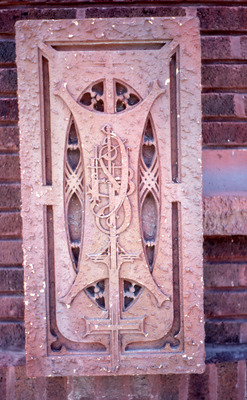
Alt Text: Pink vertical stone panel with geometric pattern on a red brick wall of a municipal building. Color image.
The Peoples Savings Bank in Cedar Rapids, Iowa, was designed by Louis Sullivan. It was the second of a number of small "jewel box" banks in Midwest towns designed by Sullivan during 1907 to 1919. The bank was built in 1911.
-
![[IA, Cedar Rapids. 30] Peoples Saving Bank. 07 by Carl L. Thurman](https://scholarworks.uni.edu/sullivan_images/1105/thumbnail.jpg "[IA, Cedar Rapids. 30] Peoples Saving Bank. 07 by Carl L. Thurman")
[IA, Cedar Rapids. 30] Peoples Saving Bank. 07
1992
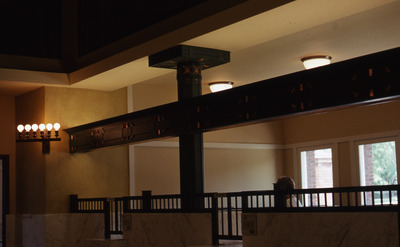
Alt Text: Interior room inside a building with tan walls, iron railings, and carved wooden joist and post. A person sits behind the railing. Color image.
The Peoples Savings Bank in Cedar Rapids, Iowa, was designed by Louis Sullivan. It was the second of a number of small "jewel box" banks in Midwest towns designed by Sullivan during 1907 to 1919. The bank was built in 1911.
-
![[IA, Cedar Rapids. 30] Peoples Saving Bank. 08 by Carl L. Thurman](https://scholarworks.uni.edu/sullivan_images/1106/thumbnail.jpg "[IA, Cedar Rapids. 30] Peoples Saving Bank. 08 by Carl L. Thurman")
[IA, Cedar Rapids. 30] Peoples Saving Bank. 08
1992
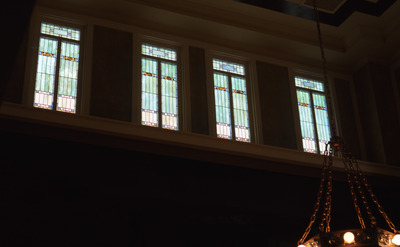
Alt Text: Interior view of four stained glass windows near the ceiling of the room. A large chandelier hangs from the ceiling on the right side of the photograph. Color image.
The Peoples Savings Bank in Cedar Rapids, Iowa, was designed by Louis Sullivan. It was the second of a number of small "jewel box" banks in Midwest towns designed by Sullivan during 1907 to 1919. The bank was built in 1911.
-
![[IA, Cedar Rapids. 31] St. Paul's Methodist Episcopal Church. 01 by Carl L. Thurman](https://scholarworks.uni.edu/sullivan_images/1107/thumbnail.jpg "[IA, Cedar Rapids. 31] St. Paul's Methodist Episcopal Church. 01 by Carl L. Thurman")
[IA, Cedar Rapids. 31] St. Paul's Methodist Episcopal Church. 01
1992
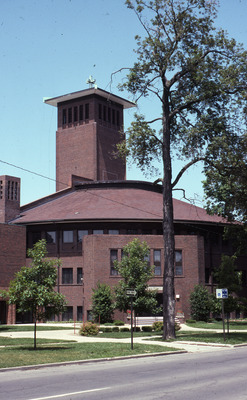
Alt Text: Three-story brown brick building with round roof and tall, rectangular steeple. Several trees surround the building. Color image. p>St. Paul's United Methodist Church is located in downtown Cedar Rapids, Iowa. Louis Sullivan was commissioned to design the church during 1910-1911. Sullivan lived in Cedar Rapids from 1910-1912 while he designed the church. Louis Sullivan’s original 1910 design included a gymnasium, highly organized Sunday school space, a dome of multicolored glass, and extensive exterior ornamentation. Its cost was twice what had been planned for, however, and rather than sacrifice his design, he withdrew from the project in 1912. Another architect, W.C. Jones, simplified the design after Sullivan left the project. The church as built in 1914.
-
![[IA, Cedar Rapids. 31] St. Paul's Methodist Episcopal Church. 02 by Carl L. Thurman](https://scholarworks.uni.edu/sullivan_images/1108/thumbnail.jpg "[IA, Cedar Rapids. 31] St. Paul's Methodist Episcopal Church. 02 by Carl L. Thurman")
[IA, Cedar Rapids. 31] St. Paul's Methodist Episcopal Church. 02
1992
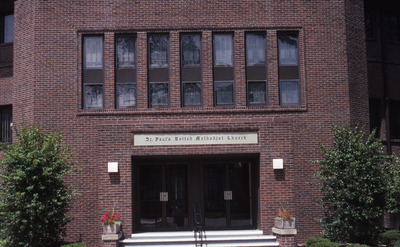
Alt Text: Front entrance of a church building including two glass double doors, sconce lights, and potted plants and bushes on either side of the doorway. Several rows of stained glass windows are on the second floor. St. Paul's United Methodist Church sign hangs above the door. Color image.
St. Paul's United Methodist Church is located in downtown Cedar Rapids, Iowa. Louis Sullivan was commissioned to design the church during 1910-1911. Sullivan lived in Cedar Rapids from 1910-1912 while he designed the church. Louis Sullivan’s original 1910 design included a gymnasium, highly organized Sunday school space, a dome of multicolored glass, and extensive exterior ornamentation. Its cost was twice what had been planned for, however, and rather than sacrifice his design, he withdrew from the project in 1912. Another architect, W.C. Jones, simplified the design after Sullivan left the project. The church as built in 1914.
-
![[IA, Cedar Rapids. 31] St. Paul's Methodist Episcopal Church. 03 by Carl L. Thurman](https://scholarworks.uni.edu/sullivan_images/1109/thumbnail.jpg "[IA, Cedar Rapids. 31] St. Paul's Methodist Episcopal Church. 03 by Carl L. Thurman")
[IA, Cedar Rapids. 31] St. Paul's Methodist Episcopal Church. 03
1992
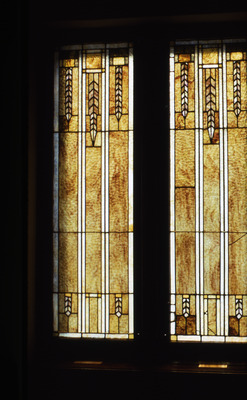
Alt Text: Close-up, interior view of two long, variegated brown and tan stained glass windows. Color image.
St. Paul's United Methodist Church is located in downtown Cedar Rapids, Iowa. Louis Sullivan was commissioned to design the church during 1910-1911. Sullivan lived in Cedar Rapids from 1910-1912 while he designed the church. Louis Sullivan’s original 1910 design included a gymnasium, highly organized Sunday school space, a dome of multicolored glass, and extensive exterior ornamentation. Its cost was twice what had been planned for, however, and rather than sacrifice his design, he withdrew from the project in 1912. Another architect, W.C. Jones, simplified the design after Sullivan left the project. The church as built in 1914.
-
![[IA, Cedar Rapids. 31] St. Paul's Methodist Episcopal Church. 04 by Carl L. Thurman](https://scholarworks.uni.edu/sullivan_images/1110/thumbnail.jpg "[IA, Cedar Rapids. 31] St. Paul's Methodist Episcopal Church. 04 by Carl L. Thurman")
[IA, Cedar Rapids. 31] St. Paul's Methodist Episcopal Church. 04
1992
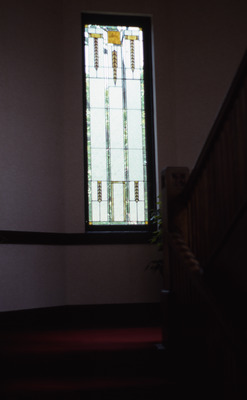
Alt Text: Interior view of a tall, green, gold and white stained glass window sitting above a landing, including a stained wood stair railing and red carpeted stairs. Color image.
St. Paul's United Methodist Church is located in downtown Cedar Rapids, Iowa. Louis Sullivan was commissioned to design the church during 1910-1911. Sullivan lived in Cedar Rapids from 1910-1912 while he designed the church. Louis Sullivan’s original 1910 design included a gymnasium, highly organized Sunday school space, a dome of multicolored glass, and extensive exterior ornamentation. Its cost was twice what had been planned for, however, and rather than sacrifice his design, he withdrew from the project in 1912. Another architect, W.C. Jones, simplified the design after Sullivan left the project. The church as built in 1914.
-
![[IA, Clinton. 32] John D. Van Allen & Company Department Store. 01 by Carl L. Thurman](https://scholarworks.uni.edu/sullivan_images/1111/thumbnail.jpg "[IA, Clinton. 32] John D. Van Allen & Company Department Store. 01 by Carl L. Thurman")
[IA, Clinton. 32] John D. Van Allen & Company Department Store. 01
1996
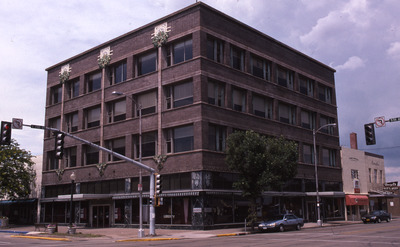
Alt Text: Angled view of brown, square, brick municipal building with four stories and lined with several windows on each floor. Building sits on a corner lot on a city street. Color image.
The Van Allen Building, also known as Van Allen and Company Department Store, is a historic commercial building at Fifth Avenue and South Second Street in Clinton, Iowa. The four-story building was designed by Louis Sullivan and commissioned by John Delbert Van Allen. It was constructed in 1913–1915 as a department store.
-
![[IA, Clinton. 32] John D. Van Allen & Company Department Store. 02 by Carl L. Thurman](https://scholarworks.uni.edu/sullivan_images/1112/thumbnail.jpg "[IA, Clinton. 32] John D. Van Allen & Company Department Store. 02 by Carl L. Thurman")
[IA, Clinton. 32] John D. Van Allen & Company Department Store. 02
1996
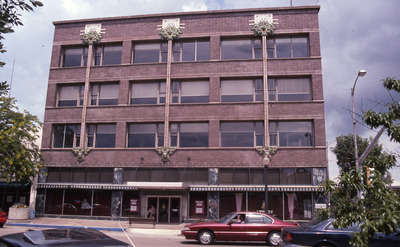
Alt Text: Front view of brown, four story square brick municipal building with large windows on each floor. A white awning sits above a set of triple glass entrance doors. Color image.
The Van Allen Building, also known as Van Allen and Company Department Store, is a historic commercial building at Fifth Avenue and South Second Street in Clinton, Iowa. The four-story building was designed by Louis Sullivan and commissioned by John Delbert Van Allen. It was constructed in 1913–1915 as a department store.
-
![[IA, Clinton. 32] John D. Van Allen & Company Department Store. 03 by Carl L. Thurman](https://scholarworks.uni.edu/sullivan_images/1113/thumbnail.jpg "[IA, Clinton. 32] John D. Van Allen & Company Department Store. 03 by Carl L. Thurman")
[IA, Clinton. 32] John D. Van Allen & Company Department Store. 03
1996
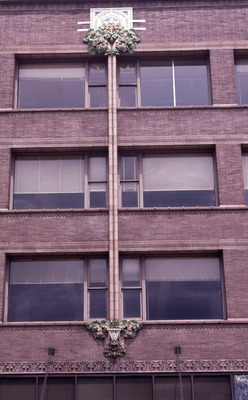
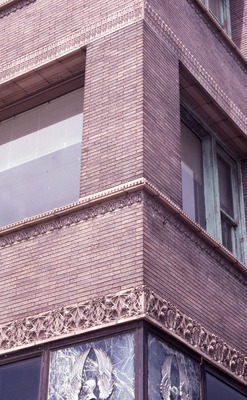
Alt Text: Close up of windows and decorative stone on the second, third, and fourth floors of a brown brick municipal building. Color image.
The Van Allen Building, also known as Van Allen and Company Department Store, is a historic commercial building at Fifth Avenue and South Second Street in Clinton, Iowa. The four-story building was designed by Louis Sullivan and commissioned by John Delbert Van Allen. It was constructed in 1913–1915 as a department store.
-
![[IA, Clinton. 32] John D. Van Allen & Company Department Store. 04 by Carl L. Thurman](https://scholarworks.uni.edu/sullivan_images/1114/thumbnail.jpg "[IA, Clinton. 32] John D. Van Allen & Company Department Store. 04 by Carl L. Thurman")
[IA, Clinton. 32] John D. Van Allen & Company Department Store. 04
1996
Alt Text: Corner view of brown brick building featuring large windows and decorative stone carving. Color image.
The Van Allen Building, also known as Van Allen and Company Department Store, is a historic commercial building at Fifth Avenue and South Second Street in Clinton, Iowa. The four-story building was designed by Louis Sullivan and commissioned by John Delbert Van Allen. It was constructed in 1913–1915 as a department store.
-
![[IA, Clinton. 32] John D. Van Allen & Company Department Store. 05 by Carl L. Thurman](https://scholarworks.uni.edu/sullivan_images/1115/thumbnail.jpg "[IA, Clinton. 32] John D. Van Allen & Company Department Store. 05 by Carl L. Thurman")
[IA, Clinton. 32] John D. Van Allen & Company Department Store. 05
1996
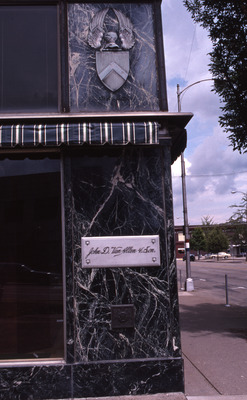
Alt Text: Close up of black and white marble corner pillar with a sign reading "John D. Van Allen & Son." on a shiny metal plate. Color image.
The Van Allen Building, also known as Van Allen and Company Department Store, is a historic commercial building at Fifth Avenue and South Second Street in Clinton, Iowa. The four-story building was designed by Louis Sullivan and commissioned by John Delbert Van Allen. It was constructed in 1913–1915 as a department store.
-
![[IA, Clinton. 32] John D. Van Allen & Company Department Store. 06 by Carl L. Thurman](https://scholarworks.uni.edu/sullivan_images/1116/thumbnail.jpg "[IA, Clinton. 32] John D. Van Allen & Company Department Store. 06 by Carl L. Thurman")
[IA, Clinton. 32] John D. Van Allen & Company Department Store. 06
1996
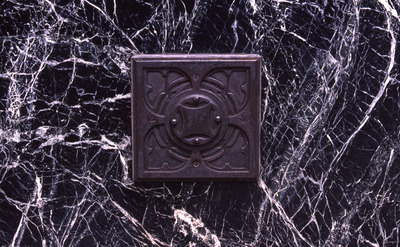
Alt Text: Close up of a brown decorative metal accent tile on a black and white marble stone. Color image.
The Van Allen Building, also known as Van Allen and Company Department Store, is a historic commercial building at Fifth Avenue and South Second Street in Clinton, Iowa. The four-story building was designed by Louis Sullivan and commissioned by John Delbert Van Allen. It was constructed in 1913–1915 as a department store.
-
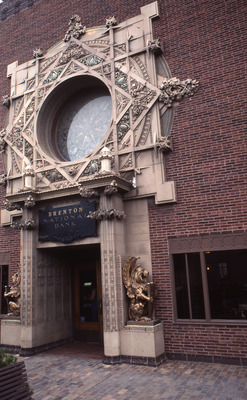
![[IA, Grinnell. 33] Merchants' National Bank. 01 by Carl L. Thurman](https://scholarworks.uni.edu/sullivan_images/1117/thumbnail.jpg "[IA, Grinnell. 33] Merchants' National Bank. 01 by Carl L. Thurman")
[IA, Grinnell. 33] Merchants' National Bank. 01
2001
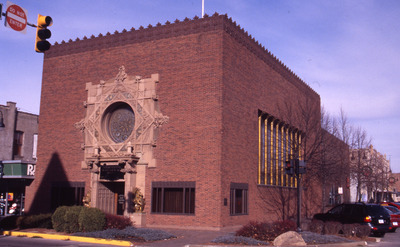
Alt Text: Brown, square-shaped brick building, featuring stone and metal tapestry surrounding a round, stained glass window above the main entrance. Color image.
The Merchants' National Bank building is a historic commercial building located in Grinnell, Iowa at 833 Fourth Avenue. It is one of the eight Midwestern "jewel-box" banks designed by Louis Sullivan. The bank was constructed in 1914 for $60,000 and remained a bank until 1999.
-
![[IA, Grinnell. 33] Merchants' National Bank. 02 by Carl L. Thurman](https://scholarworks.uni.edu/sullivan_images/1118/thumbnail.jpg "[IA, Grinnell. 33] Merchants' National Bank. 02 by Carl L. Thurman")
[IA, Grinnell. 33] Merchants' National Bank. 02
2001
Alt Text: Close up of stone and metal tapestry facade surrounding a round, stained glass window above the main entrance, with a sign that reads Brenton National Bank. Color image.
The Merchants' National Bank building is a historic commercial building located in Grinnell, Iowa at 833 Fourth Avenue. It is one of the eight Midwestern "jewel-box" banks designed by Louis Sullivan. The bank was constructed in 1914 for $60,000 and remained a bank until 1999.
-
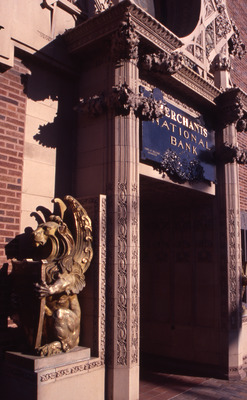
![[IA, Grinnell. 33] Merchants' National Bank. 03 by Carl L. Thurman](https://scholarworks.uni.edu/sullivan_images/1119/thumbnail.jpg "[IA, Grinnell. 33] Merchants' National Bank. 03 by Carl L. Thurman")
[IA, Grinnell. 33] Merchants' National Bank. 03
2001
Alt Text: Close up entrance view of a carved stone facade with a blue sign reading 'Merchants National Bank'. A gold lion sits adjacent to the entrance. Color image.
The Merchants' National Bank building is a historic commercial building located in Grinnell, Iowa at 833 Fourth Avenue. It is one of the eight Midwestern "jewel-box" banks designed by Louis Sullivan. The bank was constructed in 1914 for $60,000 and remained a bank until 1999.
-
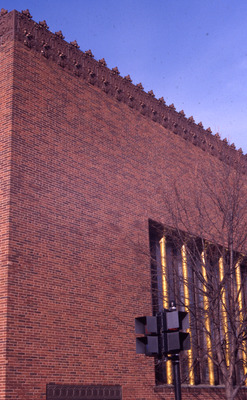
![[IA, Grinnell. 33] Merchants' National Bank. 04 by Carl L. Thurman](https://scholarworks.uni.edu/sullivan_images/1120/thumbnail.jpg "[IA, Grinnell. 33] Merchants' National Bank. 04 by Carl L. Thurman")
[IA, Grinnell. 33] Merchants' National Bank. 04
2001
Alt Text: Close up of red brick building with terra cotta cornice and several tall windows. A crosswalk sign stands in front of the building. Color image.
The Merchants' National Bank building is a historic commercial building located in Grinnell, Iowa at 833 Fourth Avenue. It is one of the eight Midwestern "jewel-box" banks designed by Louis Sullivan. The bank was constructed in 1914 for $60,000 and remained a bank until 1999.
-
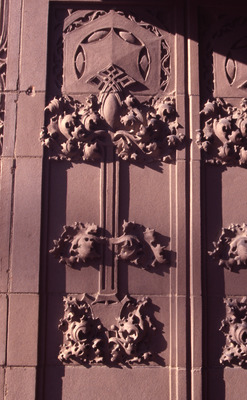
![[IA, Grinnell. 33] Merchants' National Bank. 05 by Carl L. Thurman](https://scholarworks.uni.edu/sullivan_images/1121/thumbnail.jpg "[IA, Grinnell. 33] Merchants' National Bank. 05 by Carl L. Thurman")
[IA, Grinnell. 33] Merchants' National Bank. 05
2001
Alt Text: Close-up of terra-cotta decorative stone cartouche. Color image.
The Merchants' National Bank building is a historic commercial building located in Grinnell, Iowa at 833 Fourth Avenue. It is one of the eight Midwestern "jewel-box" banks designed by Louis Sullivan. The bank was constructed in 1914 for $60,000 and remained a bank until 1999.
-
![[IA, Grinnell. 33] Merchants' National Bank. 06 by Carl L. Thurman](https://scholarworks.uni.edu/sullivan_images/1122/thumbnail.jpg "[IA, Grinnell. 33] Merchants' National Bank. 06 by Carl L. Thurman")
[IA, Grinnell. 33] Merchants' National Bank. 06
2001
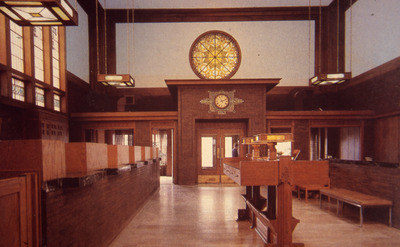
Alt Text: Interior view of a large room with wooden trim, teller stations, a carved wooden check desk, marble floors, and round stained glass window above the glass double-door entrance. Color image.
The Merchants' National Bank building is a historic commercial building located in Grinnell, Iowa at 833 Fourth Avenue. It is one of the eight Midwestern "jewel-box" banks designed by Louis Sullivan. The bank was constructed in 1914 for $60,000 and remained a bank until 1999.
-
![[IA, Grinnell. 33] Merchants' National Bank. 07 by Carl L. Thurman](https://scholarworks.uni.edu/sullivan_images/1123/thumbnail.jpg "[IA, Grinnell. 33] Merchants' National Bank. 07 by Carl L. Thurman")
[IA, Grinnell. 33] Merchants' National Bank. 07
2001
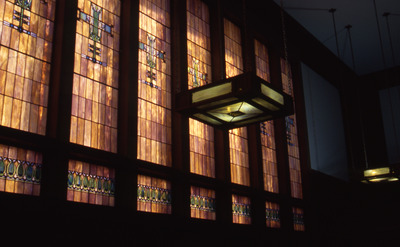
Alt Text: Interior view of tall row of green, blue, and gold stained glass windows. Two square, stained glass lamps hang in front of the windows. Color image.
The Merchants' National Bank building is a historic commercial building located in Grinnell, Iowa at 833 Fourth Avenue. It is one of the eight Midwestern "jewel-box" banks designed by Louis Sullivan. The bank was constructed in 1914 for $60,000 and remained a bank until 1999.
-
![[IA, Grinnell. 33] Merchants' National Bank. 08 by Carl L. Thurman](https://scholarworks.uni.edu/sullivan_images/1124/thumbnail.jpg "[IA, Grinnell. 33] Merchants' National Bank. 08 by Carl L. Thurman")
[IA, Grinnell. 33] Merchants' National Bank. 08
2001
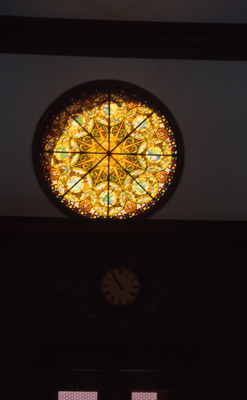
Alt Text: Large round stained glass window featuring golds, blues, reds, and greens in a kaleidoscope fashion, sits above a clock. Color image.
The Merchants' National Bank building is a historic commercial building located in Grinnell, Iowa at 833 Fourth Avenue. It is one of the eight Midwestern "jewel-box" banks designed by Louis Sullivan. The bank was constructed in 1914 for $60,000 and remained a bank until 1999.
-
![[IA, Grinnell. 33] Merchants' National Bank. 09 by Carl L. Thurman](https://scholarworks.uni.edu/sullivan_images/1125/thumbnail.jpg "[IA, Grinnell. 33] Merchants' National Bank. 09 by Carl L. Thurman")
[IA, Grinnell. 33] Merchants' National Bank. 09
2001
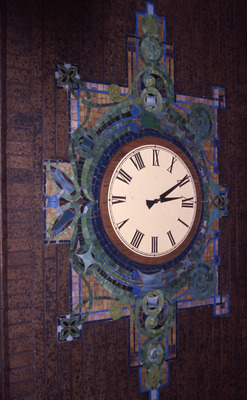
Alt Text: Round clock face with roman numerals surrounded by colorful decorative mosaic tile. Color image.
The Merchants' National Bank building is a historic commercial building located in Grinnell, Iowa at 833 Fourth Avenue. It is one of the eight Midwestern "jewel-box" banks designed by Louis Sullivan. The bank was constructed in 1914 for $60,000 and remained a bank until 1999.
-
![[IA, Grinnell. 33] Merchants' National Bank. 10 by Carl L. Thurman](https://scholarworks.uni.edu/sullivan_images/1126/thumbnail.jpg "[IA, Grinnell. 33] Merchants' National Bank. 10 by Carl L. Thurman")
[IA, Grinnell. 33] Merchants' National Bank. 10
2001
Alt Text: Vintage bronze metal bank teller window. Color image.
The Merchants' National Bank building is a historic commercial building located in Grinnell, Iowa at 833 Fourth Avenue. It is one of the eight Midwestern "jewel-box" banks designed by Louis Sullivan. The bank was constructed in 1914 for $60,000 and remained a bank until 1999.
-
![[IL, Aurora. 01] Aurora Watch Company [Site of]. 01 by Carl L. Thurman](https://scholarworks.uni.edu/sullivan_images/1000/thumbnail.jpg "[IL, Aurora. 01] Aurora Watch Company [Site of]. 01 by Carl L. Thurman")
[IL, Aurora. 01] Aurora Watch Company [Site of]. 01
1998
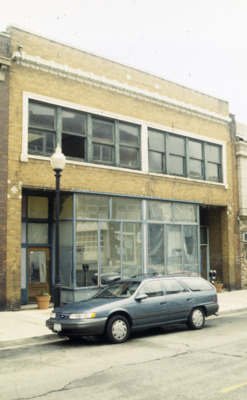
Alt Text: A blue station wagon sits in front of a two-story tan building with large glass windows spanning between two entrances. Color image.
The Aurora Watch Company Factory located at 603 South LaSalle Street in Aurora, Illinois was designed by Adler and Sullivan and built in 1883-1884. It was destroyed by fire in 1989.
-
![[IL, Aurora. 01] Aurora Watch Company [Site of]. 02 by Carl L. Thurman](https://scholarworks.uni.edu/sullivan_images/1001/thumbnail.jpg "[IL, Aurora. 01] Aurora Watch Company [Site of]. 02 by Carl L. Thurman")
[IL, Aurora. 01] Aurora Watch Company [Site of]. 02
1998
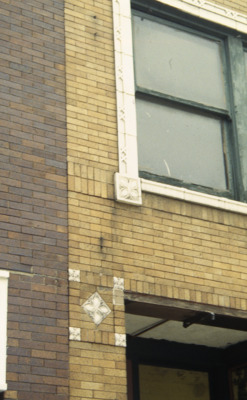
Alt Text: Tan brick building second floor window with white encasement and white decorative stone cornices. Color image.
The Aurora Watch Company Factory located at 603 South LaSalle Street in Aurora, Illinois was designed by Adler and Sullivan and built in 1883-1884. It was destroyed by fire in 1989.
-
![[IL, Chicago. 02] Jeweler's Building. 01 by Carl L. Thurman](https://scholarworks.uni.edu/sullivan_images/1002/thumbnail.jpg "[IL, Chicago. 02] Jeweler's Building. 01 by Carl L. Thurman")
[IL, Chicago. 02] Jeweler's Building. 01
1998
Alt Text: Close up of a second floor window with white encasement and white decorative stone
The Jewelers Building at 15–17 Wabash Avenue between East Monroe and East Madison Streets in the Loop community area of Chicago in Cook County, Illinois, United States was built in 1881/82 and was designed by Dankmar Adler and Louis Sullivan. It is the only example of the early work of Adler & Sullivan that survives in the Loop. It is also known as the Iwan Ries Building.
The building is a common loft building in construction and plan, but its facade departs dramatically from others of its type. An open exterior, using cast iron mullions rather than masonry piers in the central bay, and Sullivan's stylized floral ornament provide distinction.
-
![[IL, Chicago. 02] Jeweler's Building. 02 by Carl L. Thurman](https://scholarworks.uni.edu/sullivan_images/1003/thumbnail.jpg "[IL, Chicago. 02] Jeweler's Building. 02 by Carl L. Thurman")
[IL, Chicago. 02] Jeweler's Building. 02
1998
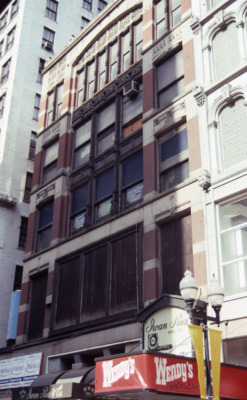
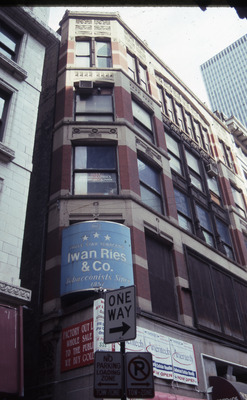
Alt Text: Corner view of a red brick and stone multi-story building in an urban setting. Sign on the corner of building reads, "Iwan Ries & Co." Color image.
The Jewelers Building at 15–17 Wabash Avenue between East Monroe and East Madison Streets in the Loop community area of Chicago in Cook County, Illinois, United States was built in 1881/82 and was designed by Dankmar Adler and Louis Sullivan. It is the only example of the early work of Adler & Sullivan that survives in the Loop. It is also known as the Iwan Ries Building.
The building is a common loft building in construction and plan, but its facade departs dramatically from others of its type. An open exterior, using cast iron mullions rather than masonry piers in the central bay, and Sullivan's stylized floral ornament provide distinction.
-
![[IL, Chicago. 03] Brunswick & Balke Factory [Site of]. 01 by Carl L. Thurman](https://scholarworks.uni.edu/sullivan_images/1004/thumbnail.jpg "[IL, Chicago. 03] Brunswick & Balke Factory [Site of]. 01 by Carl L. Thurman")
[IL, Chicago. 03] Brunswick & Balke Factory [Site of]. 01
1998
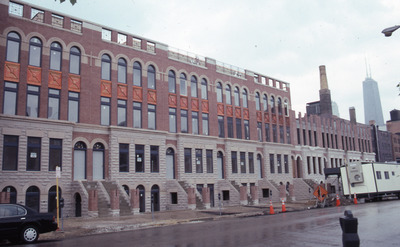
Alt Text: Four story red brick and stone factory building with multiple windows on each floor. A smokestack and the sears tower stand in the background. Color image.
The Brunswick & Balke Factory located on Huron and Orleans Streets was destroyed by fire in 1989 and is now demolished and replaced with townhomes.
-
![[IL, Chicago. 03] Brunswick & Balke Factory [Site of]. 02 by Carl L. Thurman](https://scholarworks.uni.edu/sullivan_images/1005/thumbnail.jpg "[IL, Chicago. 03] Brunswick & Balke Factory [Site of]. 02 by Carl L. Thurman")
[IL, Chicago. 03] Brunswick & Balke Factory [Site of]. 02
1998
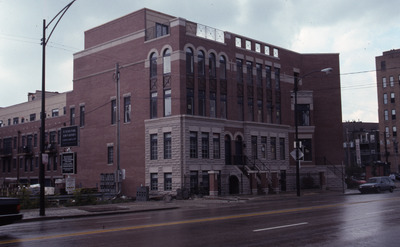
Alt Text: Angled view of a red brick and stone multi-story building on a city street. Color image.
The Brunswick & Balke Factory located on Huron and Orleans Streets was destroyed by fire in 1989 and is now demolished and replaced with townhomes.
-
![[IL, Chicago. 03] Brunswick & Balke Factory [Site of]. 03 by Carl L. Thurman](https://scholarworks.uni.edu/sullivan_images/1008/thumbnail.jpg "[IL, Chicago. 03] Brunswick & Balke Factory [Site of]. 03 by Carl L. Thurman")
[IL, Chicago. 03] Brunswick & Balke Factory [Site of]. 03
1998
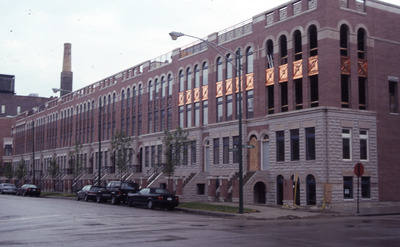
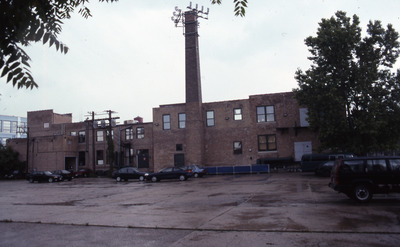
Alt Text: Angled view of a large red brick and stone factory building with four stories. A smokestack towers in the background. Color image.
The Brunswick & Balke Factory located on Huron and Orleans Streets was destroyed by fire in 1989 and is now demolished and replaced with townhomes.
-
![[IL, Chicago. 04] Ferdinand & William Kauffmann Store & Flats. 01 by Carl L. Thurman](https://scholarworks.uni.edu/sullivan_images/1006/thumbnail.jpg "[IL, Chicago. 04] Ferdinand & William Kauffmann Store & Flats. 01 by Carl L. Thurman")
[IL, Chicago. 04] Ferdinand & William Kauffmann Store & Flats. 01
1998
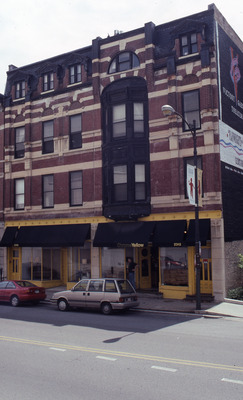
Alt Text: Two cars sit in front of a large red and black brick building with decorative stone accents and yellow storefront facade with black awnings. Color image.
One of the earliest surviving Adler & Sullivan-designed buildings was constructed for Ferdinand Kaufmann in two sections between 1883 and 1887 at 2312-14 N. Lincoln. Out of the nearly 200 buildings designed by the architectural firm, only 15 projects still stand in Chicago. This is one of them.
-
![[IL, Chicago. 04] Ferdinand & William Kauffmann Store & Flats. 02 by Carl L. Thurman](https://scholarworks.uni.edu/sullivan_images/1007/thumbnail.jpg "[IL, Chicago. 04] Ferdinand & William Kauffmann Store & Flats. 02 by Carl L. Thurman")
[IL, Chicago. 04] Ferdinand & William Kauffmann Store & Flats. 02
1998
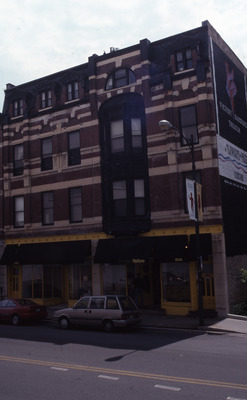
Alt Text: Two cars sit in front of a large red and black brick building with decorative stone accents and yellow storefront facade with black awnings. Color image.
One of the earliest surviving Adler & Sullivan-designed buildings was constructed for Ferdinand Kaufmann in two sections between 1883 and 1887 at 2312-14 N. Lincoln. Out of the nearly 200 buildings designed by the architectural firm, only 15 projects still stand in Chicago. This is one of them.
-
![[IL, Chicago. 05] Ann Halsted Residence. 01 by Carl L. Thurman](https://scholarworks.uni.edu/sullivan_images/1009/thumbnail.jpg "[IL, Chicago. 05] Ann Halsted Residence. 01 by Carl L. Thurman")
[IL, Chicago. 05] Ann Halsted Residence. 01
1998
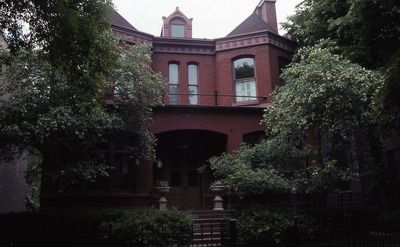
Alt Text: Two story red brick residence with double doors and gabled window at the top, surrounded by trees. Color image.
The Ann Halsted House is a house located at 440 W. Belden Street in the Lincoln Park community area of Chicago, Illinois. Designed in 1883 and built by 1884, the house is the oldest surviving residence designed by Dankmar Adler and Louis Sullivan.
-
![[IL, Chicago. 05] Ann Halsted Residence. 02 by Carl L. Thurman](https://scholarworks.uni.edu/sullivan_images/1010/thumbnail.jpg "[IL, Chicago. 05] Ann Halsted Residence. 02 by Carl L. Thurman")
[IL, Chicago. 05] Ann Halsted Residence. 02
1998
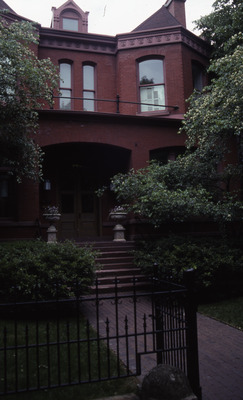
Alt Text: Sidewalk leading to a two story red brick residence, with double doors and a gabled window at the top, surrounded by trees and a black wrought-iron fence. Color image.
The Ann Halsted House is a house located at 440 W. Belden Street in the Lincoln Park community area of Chicago, Illinois. Designed in 1883 and built by 1884, the house is the oldest surviving residence designed by Dankmar Adler and Louis Sullivan.
-
![[IL, Chicago. 06] Leon Mannheimer Residence. 01 by Carl L. Thurman](https://scholarworks.uni.edu/sullivan_images/1011/thumbnail.jpg "[IL, Chicago. 06] Leon Mannheimer Residence. 01 by Carl L. Thurman")
[IL, Chicago. 06] Leon Mannheimer Residence. 01
1998
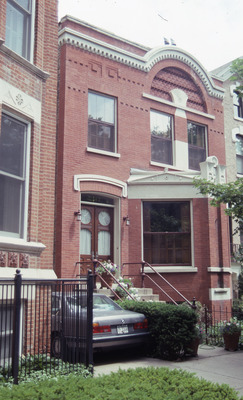
Alt Text: Two story red brick brownstone with white stone accents, featuring a double door with decorative windows. A car sits next to a hedge adjacent to the entrance stairway. Color image.
The Leon Mannheimer House located at 2147 North Cleveland Avenue designed by Adler and Sullivan and built in 1884 show the mixture of mostly unadorned masonry work mixed with detailed geometric patterns for ornament.
-
![[IL, Chicago. 06] Leon Mannheimer Residence. 02 by Carl L. Thurman](https://scholarworks.uni.edu/sullivan_images/1012/thumbnail.jpg "[IL, Chicago. 06] Leon Mannheimer Residence. 02 by Carl L. Thurman")
[IL, Chicago. 06] Leon Mannheimer Residence. 02
1998
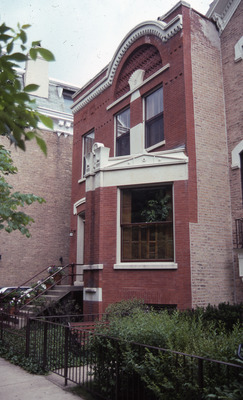
Alt Text: Angled view of a two story red brick brownstone with white stone accents, featuring a large window in a residential area. Color image.
The Leon Mannheimer House located at 2147 North Cleveland Avenue designed by Adler and Sullivan and built in 1884 show the mixture of mostly unadorned masonry work mixed with detailed geometric patterns for ornament.
-
![[IL, Chicago. 06] Leon Mannheimer Residence. 03 by Carl L. Thurman](https://scholarworks.uni.edu/sullivan_images/1013/thumbnail.jpg "[IL, Chicago. 06] Leon Mannheimer Residence. 03 by Carl L. Thurman")
[IL, Chicago. 06] Leon Mannheimer Residence. 03
1998
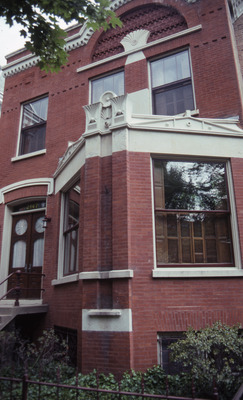
Alt Text: Close up view of a two story red brick brownstone with white stone decorative accents and facade, featuring a large main floor windows and a double door entrance in a residential area. Color image.
The Leon Mannheimer House located at 2147 North Cleveland Avenue designed by Adler and Sullivan and built in 1884 show the mixture of mostly unadorned masonry work mixed with detailed geometric patterns for ornament.
-
![[IL, Chicago. 07] Gustav Eliel Residence. 01 by Carl L. Thurman](https://scholarworks.uni.edu/sullivan_images/1014/thumbnail.jpg "[IL, Chicago. 07] Gustav Eliel Residence. 01 by Carl L. Thurman")
[IL, Chicago. 07] Gustav Eliel Residence. 01
1998
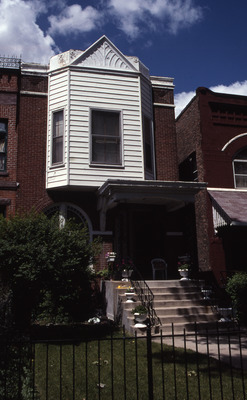
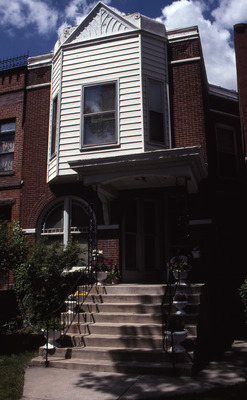
Alt Text: Two story brown brick building with steps to a main floor entrance. A second-floor facade of white siding and decorative cornice sits above a covered porch. Color image.
The Gustav Eliel Residence located at 4122 S. Ellis Avenue is one of the few surviving examples of the small residential projects that made up the early work of Dankmar Adler and Louis H. Sullivan. The outside is notable for the entryway.
-
![[IL, Chicago. 07] Gustav Eliel Residence. 02 by Carl L. Thurman](https://scholarworks.uni.edu/sullivan_images/1015/thumbnail.jpg "[IL, Chicago. 07] Gustav Eliel Residence. 02 by Carl L. Thurman")
[IL, Chicago. 07] Gustav Eliel Residence. 02
1998
Alt Text: Two story brown brick building with steps up to a main floor entrance. A second-floor facade of white siding and decorative cornice sits above a covered porch. Color image.
The Gustav Eliel Residence located at 4122 S. Ellis Avenue is one of the few surviving examples of the small residential projects that made up the early work of Dankmar Adler and Louis H. Sullivan. The outside is notable for the entryway.
-
![[IL, Chicago. 08] Joseph Deimal Residence. 01 by Carl L. Thurman](https://scholarworks.uni.edu/sullivan_images/1016/thumbnail.jpg "[IL, Chicago. 08] Joseph Deimal Residence. 01 by Carl L. Thurman")
[IL, Chicago. 08] Joseph Deimal Residence. 01
1998
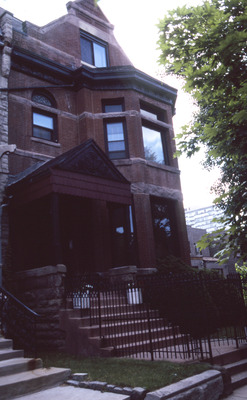
Alt Text: Two story brown brick brownstone with covered entrance and surrounded by a black wrought iron fence in a residential neighborhood.
Joseph Deimal Residence designed by Adler and Sullivan and built in 1886 is located at 3141 Calumet Avenue. Most of the architectural detail is inside. The exterior is notable for the entryway.
-
![[IL, Chicago. 09] George M. Harvey Residence. 01 by Carl L. Thurman](https://scholarworks.uni.edu/sullivan_images/1017/thumbnail.jpg "[IL, Chicago. 09] George M. Harvey Residence. 01 by Carl L. Thurman")
[IL, Chicago. 09] George M. Harvey Residence. 01
1998
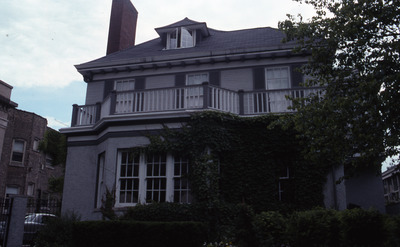
Alt Text: Large two story gray house with second floor deck and a single dormer window surrounded by trees in a residential neighborhood. Color image.
Adler and Sullivan's George M. Harvey House located at 600 West Stratford Place. The 1888 structure was severely damaged by fire on April 4, 2006.
-
![[IL, Chicago. 09] George M. Harvey Residence. 02 by Carl L. Thurman](https://scholarworks.uni.edu/sullivan_images/1018/thumbnail.jpg "[IL, Chicago. 09] George M. Harvey Residence. 02 by Carl L. Thurman")
[IL, Chicago. 09] George M. Harvey Residence. 02
1998
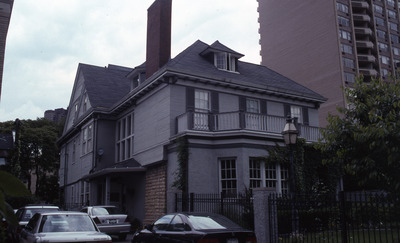
Alt Text: Several cars sit adjacent to a large two story gray house with second floor deck and a few dormer windows surrounded by trees in a residential neighborhood. A high-rise apartment towers in the background. Color image.
Adler and Sullivan's George M. Harvey House located at 600 West Stratford Place. The 1888 structure was severely damaged by fire on April 4, 2006.
-
![[IL, Chicago. 10] Wirt Dexter Building. 01 by Carl L. Thurman](https://scholarworks.uni.edu/sullivan_images/1019/thumbnail.jpg "[IL, Chicago. 10] Wirt Dexter Building. 01 by Carl L. Thurman")
[IL, Chicago. 10] Wirt Dexter Building. 01
1998
Alt Text: Six story red brick factory building with multiple windows as cars drive by on a city street. A large exterior sign reading "George Diamond" extends from the top floor supported by posts and wires. Color image.
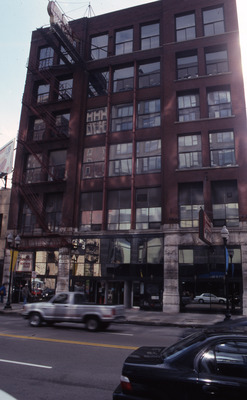
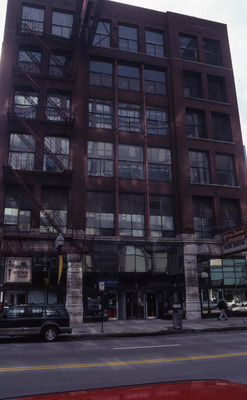
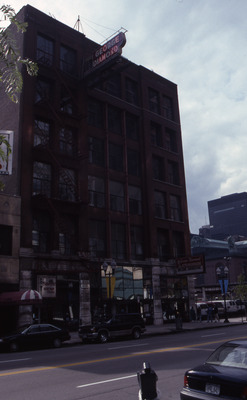
The Wirt Dexter Building designed by Adler and Sullivan was located at 630 South Wabash Avenue. The building was initially used as a factory and showroom for R. Deimel & Brothers, a furniture manufacturing firm. The building was destroyed by fire on October 24, 2006.
-
![[IL, Chicago. 10] Wirt Dexter Building. 02 by Carl L. Thurman](https://scholarworks.uni.edu/sullivan_images/1020/thumbnail.jpg "[IL, Chicago. 10] Wirt Dexter Building. 02 by Carl L. Thurman")
[IL, Chicago. 10] Wirt Dexter Building. 02
1998
Alt Text: Six story red brick factory building with multiple windows on a city street. Exterior fire escape stairs flank the left side of the image. Color image.
The Wirt Dexter Building designed by Adler and Sullivan was located at 630 South Wabash Avenue. The building was initially used as a factory and showroom for R. Deimel & Brothers, a furniture manufacturing firm. The building was destroyed by fire on October 24, 2006.
-
![[IL, Chicago. 10] Wirt Dexter Building. 03 by Carl L. Thurman](https://scholarworks.uni.edu/sullivan_images/1021/thumbnail.jpg "[IL, Chicago. 10] Wirt Dexter Building. 03 by Carl L. Thurman")
[IL, Chicago. 10] Wirt Dexter Building. 03
1998
Alt Text: Shadowy view of a six story red brick factory building with multiple windows as cars drive by on a city street. A large exterior sign reading "George Diamond" extends from the top floor supported by posts and wires. Color image.
The Wirt Dexter Building designed by Adler and Sullivan was located at 630 South Wabash Avenue. The building was initially used as a factory and showroom for R. Deimel & Brothers, a furniture manufacturing firm. The building was destroyed by fire on October 24, 2006.
-
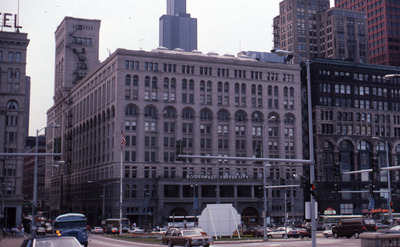
![[IL, Chicago. 12] Auditorium Building. 01 by Carl L. Thurman](https://scholarworks.uni.edu/sullivan_images/1024/thumbnail.jpg "[IL, Chicago. 12] Auditorium Building. 01 by Carl L. Thurman")
[IL, Chicago. 12] Auditorium Building. 01
1998
Alt Text: Ten-story gray and white stone municipal building with multiple windows on a city street corner. Color image.
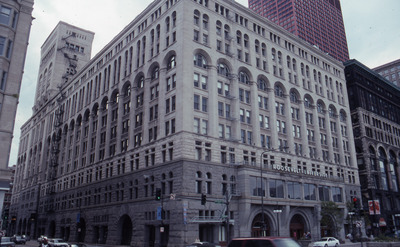
The Auditorium Building designed by Alder and Sullivan and built during 1886-1889 was Sullivan’s initial effort at designing the large commercial block. The building incorporated multiple systems that supported a state-of-the-art performance space, a first-class hotel, and desirable office space.
-
![[IL, Chicago. 12] Auditorium Building. 02 by Carl L. Thurman](https://scholarworks.uni.edu/sullivan_images/1025/thumbnail.jpg "[IL, Chicago. 12] Auditorium Building. 02 by Carl L. Thurman")
[IL, Chicago. 12] Auditorium Building. 02
1998
Alt Text: Ten-story gray and white stone municipal building with multiple windows on a city street corner. A sign reading "Roosevelt University" sits above second story windows. Skyscrapers tower in the background. Color image.
The Auditorium Building designed by Alder and Sullivan and built during 1886-1889 was Sullivan’s initial effort at designing the large commercial block. The building incorporated multiple systems that supported a state-of-the-art performance space, a first-class hotel, and desirable office space.
-
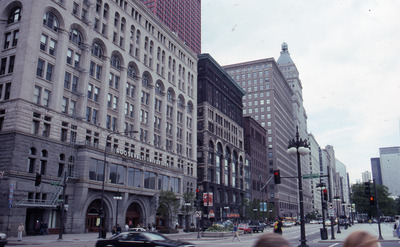
![[IL, Chicago. 12] Auditorium Building. 03 by Carl L. Thurman](https://scholarworks.uni.edu/sullivan_images/1026/thumbnail.jpg "[IL, Chicago. 12] Auditorium Building. 03 by Carl L. Thurman")
[IL, Chicago. 12] Auditorium Building. 03
1998
Alt Text: Angled city street view of multiple story brick and stone buildings on a cloudy day. Color image.
The Auditorium Building designed by Alder and Sullivan and built during 1886-1889 was Sullivan’s initial effort at designing the large commercial block. The building incorporated multiple systems that supported a state-of-the-art performance space, a first-class hotel, and desirable office space.
-
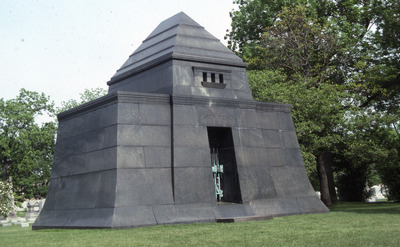
![[IL, Chicago. 13] Martin Reyerson Tomb. 01 by Carl L. Thurman](https://scholarworks.uni.edu/sullivan_images/1027/thumbnail.jpg "[IL, Chicago. 13] Martin Reyerson Tomb. 01 by Carl L. Thurman")
[IL, Chicago. 13] Martin Reyerson Tomb. 01
1998
Alt Text: Egyptian Revival style gray stone mausoleum sits in a cemetery surrounded by trees. Color image.
The Martin Ryerson Tomb is an Egyptian Revival style mausoleum designed by Louis Sullivan and completed in 1889. It is in the historic Graceland Cemetery in the Lakeside section near the intersection of cemetery roads, Main, Lake and Fairview Avenue.
-
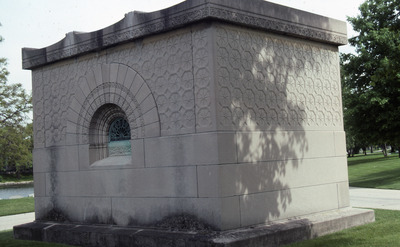
![[IL, Chicago. 14] Getty Tomb. 01 by Carl L. Thurman](https://scholarworks.uni.edu/sullivan_images/1028/thumbnail.jpg "[IL, Chicago. 14] Getty Tomb. 01 by Carl L. Thurman")
[IL, Chicago. 14] Getty Tomb. 01
1993
Alt Text: Square stone mausoleum with arched semi-circular stained glass window surrounded by decorative stone. Color image.
The Carrie Eliza Getty Tomb, located in Graceland Cemetery in Chicago, Illinois, was commissioned in 1890 by the lumber baron, Henry Harrison Getty, for his wife. It was designed by Louis Sullivan of the firm Adler & Sullivan.
-
![[IL, Chicago. 14] Getty Tomb. 02 by Carl L. Thurman](https://scholarworks.uni.edu/sullivan_images/1029/thumbnail.jpg "[IL, Chicago. 14] Getty Tomb. 02 by Carl L. Thurman")
[IL, Chicago. 14] Getty Tomb. 02
1993
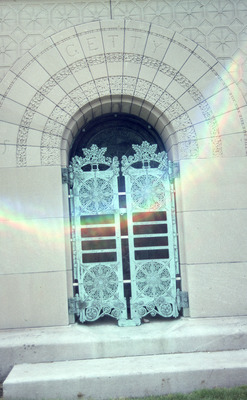
Alt Text: Green/blue oxidized metal gate entrance with arched decorative stone facade. Color image.
The Carrie Eliza Getty Tomb, located in Graceland Cemetery in Chicago, Illinois, was commissioned in 1890 by the lumber baron, Henry Harrison Getty, for his wife. It was designed by Louis Sullivan of the firm Adler & Sullivan.
-
![[IL, Chicago. 15] Standard Elevator Company Factory. 01 by Carl L. Thurman](https://scholarworks.uni.edu/sullivan_images/1030/thumbnail.jpg "[IL, Chicago. 15] Standard Elevator Company Factory. 01 by Carl L. Thurman")
[IL, Chicago. 15] Standard Elevator Company Factory. 01
1998
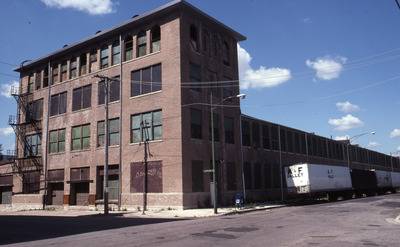
Alt Text: Four story abandoned brown brick factory building with multiple windows on each floor in an urban area. Color image.
The Standard Elevator Company factory at 1515 15th Street was built in 1891. Only the western half of the building was designed by the Adler and Sullivan partnership. Everything to the east, including the tall corner building was added in 1902 by Adler's sons.
-
![[IL, Chicago. 15] Standard Elevator Company Factory. 02 by Carl L. Thurman](https://scholarworks.uni.edu/sullivan_images/1031/thumbnail.jpg "[IL, Chicago. 15] Standard Elevator Company Factory. 02 by Carl L. Thurman")
[IL, Chicago. 15] Standard Elevator Company Factory. 02
1998
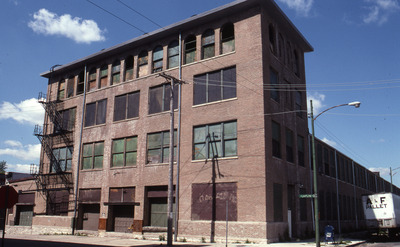
Alt Text: Four story abandoned brown brick factory building with multiple windows on each floor in an urban area. Color image.
The Standard Elevator Company factory at 1515 15th Street was built in 1891. Only the western half of the building was designed by the Adler and Sullivan partnership. Everything to the east, including the tall corner building was added in 1902 by Adler's sons.
-
![[IL, Chicago. 15] Standard Elevator Company Factory. 03 by Carl L. Thurman](https://scholarworks.uni.edu/sullivan_images/1032/thumbnail.jpg "[IL, Chicago. 15] Standard Elevator Company Factory. 03 by Carl L. Thurman")
[IL, Chicago. 15] Standard Elevator Company Factory. 03
1998
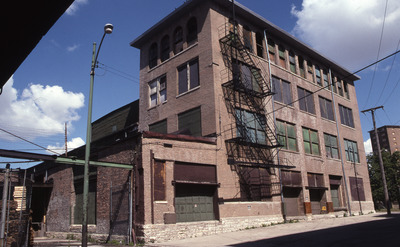
Alt Text: Angled view of a four story abandoned brown brick factory building with multiple windows on each floor in an urban area. Black exterior fire escape stairs cascade down the building. Color image.
The Standard Elevator Company factory at 1515 15th Street was built in 1891. Only the western half of the building was designed by the Adler and Sullivan partnership. Everything to the east, including the tall corner building was added in 1902 by Adler's sons.
-
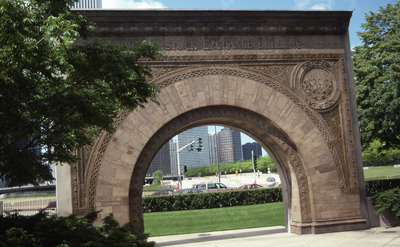
![[IL, Chicago. 16] Chicago Stock Exchange Building. 01 by Carl L. Thurman](https://scholarworks.uni.edu/sullivan_images/1022/thumbnail.jpg "[IL, Chicago. 16] Chicago Stock Exchange Building. 01 by Carl L. Thurman")
[IL, Chicago. 16] Chicago Stock Exchange Building. 01
2002
Alt Text: Chicago Stock Exchange tan stone arch featuring curved entrance and decorative stone accents. Color image.
The Chicago Stock Exchange Arch is one of the few surviving fragments from the Chicago Stock Exchange building designed in 1893, installed outside the Art Institute of Chicago in 1977. The arch was sculpted by Dankmar Adler & Louis Sullivan in 1893 and was preserved when the building was demolished in 1972.
-
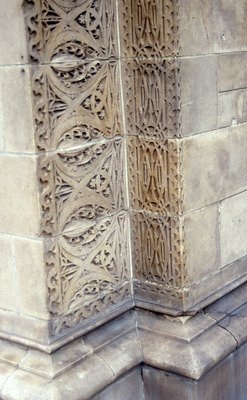
![[IL, Chicago. 16] Chicago Stock Exchange Building. 02 by Carl L. Thurman](https://scholarworks.uni.edu/sullivan_images/1142/thumbnail.jpg "[IL, Chicago. 16] Chicago Stock Exchange Building. 02 by Carl L. Thurman")
[IL, Chicago. 16] Chicago Stock Exchange Building. 02
2002
Alt Text: Close up view of tan ornate stone carving on the corner of a building, featuring intricate geometric and floral patterns.
The Chicago Stock Exchange Arch is one of the few surviving fragments from the Chicago Stock Exchange building designed in 1893, installed outside the Art Institute of Chicago in 1977. The arch was sculpted by Dankmar Adler & Louis Sullivan in 1893 and was preserved when the building was demolished in 1972.
-
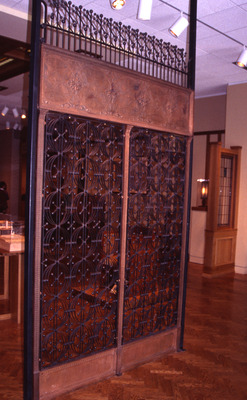
![[IL, Chicago. 16] Chicago Stock Exchange Building. 03 by Carl L. Thurman](https://scholarworks.uni.edu/sullivan_images/1143/thumbnail.jpg "[IL, Chicago. 16] Chicago Stock Exchange Building. 03 by Carl L. Thurman")
[IL, Chicago. 16] Chicago Stock Exchange Building. 03
2002
Alt Text: Section of a room featuring ornate, dark toned art glass panels with intricate pattern set within a metal framework, and topped with a decorative metal railing. Color image.
The Chicago Stock Exchange Arch is one of the few surviving fragments from the Chicago Stock Exchange building designed in 1893, installed outside the Art Institute of Chicago in 1977. The arch was sculpted by Dankmar Adler & Louis Sullivan in 1893 and was preserved when the building was demolished in 1972.
-
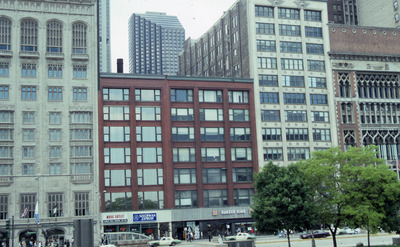
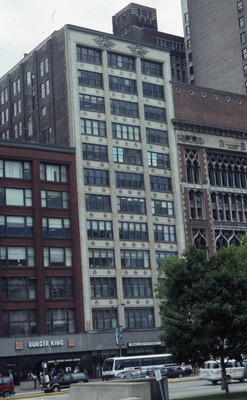
![[IL, Chicago. 17] Gage Building Facade. 01 by Carl L. Thurman](https://scholarworks.uni.edu/sullivan_images/1023/thumbnail.jpg "[IL, Chicago. 17] Gage Building Facade. 01 by Carl L. Thurman")
[IL, Chicago. 17] Gage Building Facade. 01
1987
Alt Text: Street-level view of red brick seven story building with large windows, flanked by other multiple story building with trees and a city street in the foreground. Color image.
The Gage Group Buildings consist of three buildings located at 18, 24 and 30 South Michigan Avenue in Chicago, Illinois. They were built from 1890-1899. The buildings were designed by Holabird & Roche for three millinery firms. The building at 18 South Michigan Avenue has an ornamental façade designed by Louis Sullivan.
-
![[IL, Chicago. 17] Gage Building Facade. 02 by Carl L. Thurman](https://scholarworks.uni.edu/sullivan_images/1033/thumbnail.jpg "[IL, Chicago. 17] Gage Building Facade. 02 by Carl L. Thurman")
[IL, Chicago. 17] Gage Building Facade. 02
1987
Alt Text: Street level view of multiple story stone and brick buildings in an urban area. Color image.
The Gage Group Buildings consist of three buildings located at 18, 24 and 30 South Michigan Avenue in Chicago, Illinois. They were built from 1890-1899. The buildings were designed by Holabird & Roche for three millinery firms. The building at 18 South Michigan Avenue has an ornamental façade designed by Louis Sullivan.
-
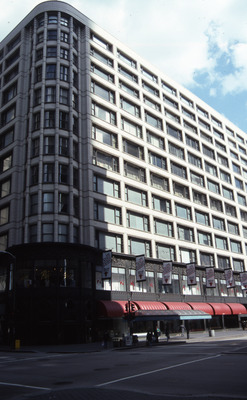
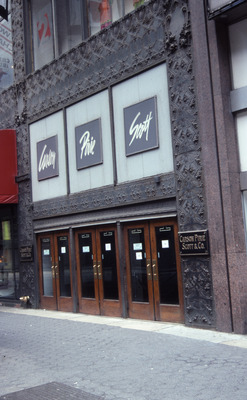
![[IL, Chicago. 18] Carson, Pirie, Scott and Company Building. 01 by Carl L. Thurman](https://scholarworks.uni.edu/sullivan_images/1034/thumbnail.jpg "[IL, Chicago. 18] Carson, Pirie, Scott and Company Building. 01 by Carl L. Thurman")
[IL, Chicago. 18] Carson, Pirie, Scott and Company Building. 01
1999
Alt Text: Corner view of a tan, twelve story office building with multiple windows on each floor. Red awnings line the ground floor entrances. Color image.
The Sullivan Center, formerly known as the Carson, Pirie, Scott and Company Building or Carson, Pirie, Scott and Company Store, is a commercial building at 1 South State Street. Louis Sullivan designed it for the retail firm Schlesinger & Mayer in 1899 and later expanded it before H.G. Selfridge & Co. purchased the structure in 1904.
-
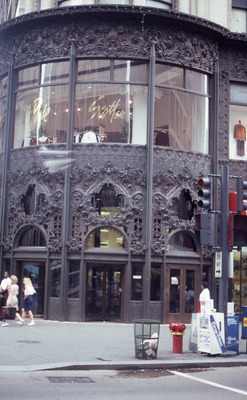
![[IL, Chicago. 18] Carson, Pirie, Scott and Company Building. 02 by Carl L. Thurman](https://scholarworks.uni.edu/sullivan_images/1035/thumbnail.jpg "[IL, Chicago. 18] Carson, Pirie, Scott and Company Building. 02 by Carl L. Thurman")
[IL, Chicago. 18] Carson, Pirie, Scott and Company Building. 02
1999
Alt Text: City street view of an ornate, cast-iron entrance facade featuring large, curved display department store windows. Color image.
The Sullivan Center, formerly known as the Carson, Pirie, Scott and Company Building or Carson, Pirie, Scott and Company Store, is a commercial building at 1 South State Street. Louis Sullivan designed it for the retail firm Schlesinger & Mayer in 1899 and later expanded it before H.G. Selfridge & Co. purchased the structure in 1904.
-
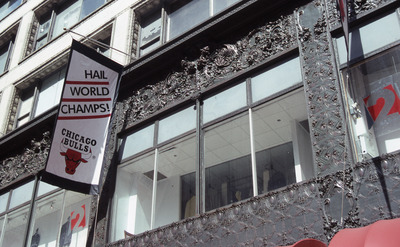
![[IL, Chicago. 18] Carson, Pirie, Scott and Company Building. 03 by Carl L. Thurman](https://scholarworks.uni.edu/sullivan_images/1036/thumbnail.jpg "[IL, Chicago. 18] Carson, Pirie, Scott and Company Building. 03 by Carl L. Thurman")
[IL, Chicago. 18] Carson, Pirie, Scott and Company Building. 03
1999
Alt Text: Close up of multi-story office building window with decorative metal trim. A sign hangs from the building that reads, "Hail World Champs! Chicago Bulls. Color image.
The Sullivan Center, formerly known as the Carson, Pirie, Scott and Company Building or Carson, Pirie, Scott and Company Store, is a commercial building at 1 South State Street. Louis Sullivan designed it for the retail firm Schlesinger & Mayer in 1899 and later expanded it before H.G. Selfridge & Co. purchased the structure in 1904.
-
![[IL, Chicago. 18] Carson, Pirie, Scott and Company Building. 04 by Carl L. Thurman](https://scholarworks.uni.edu/sullivan_images/1037/thumbnail.jpg "[IL, Chicago. 18] Carson, Pirie, Scott and Company Building. 04 by Carl L. Thurman")
[IL, Chicago. 18] Carson, Pirie, Scott and Company Building. 04
1999
Alt Text: Angled view of Carson Pirie Scott department store entrance. Three sets of wood and glass double doors sit below a large decorative metal facade. Color image.
The Sullivan Center, formerly known as the Carson, Pirie, Scott and Company Building or Carson, Pirie, Scott and Company Store, is a commercial building at 1 South State Street. Louis Sullivan designed it for the retail firm Schlesinger & Mayer in 1899 and later expanded it before H.G. Selfridge & Co. purchased the structure in 1904.
-
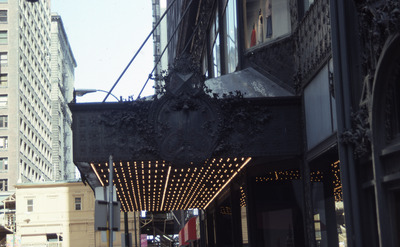
![[IL, Chicago. 18] Carson, Pirie, Scott and Company Building. 05 by Carl L. Thurman](https://scholarworks.uni.edu/sullivan_images/1038/thumbnail.jpg "[IL, Chicago. 18] Carson, Pirie, Scott and Company Building. 05 by Carl L. Thurman")
[IL, Chicago. 18] Carson, Pirie, Scott and Company Building. 05
1999
Alt Text: Large decorative metal canopy sits above a ground level building entrance in an urban area. Lights glow from underneath the canopy. Color image.
The Sullivan Center, formerly known as the Carson, Pirie, Scott and Company Building or Carson, Pirie, Scott and Company Store, is a commercial building at 1 South State Street. Louis Sullivan designed it for the retail firm Schlesinger & Mayer in 1899 and later expanded it before H.G. Selfridge & Co. purchased the structure in 1904.
-
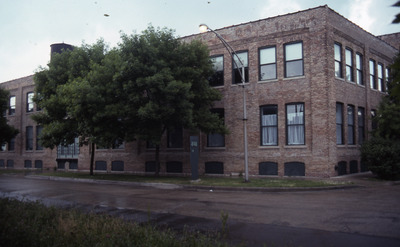
![[IL, Chicago. 19] Euston & Company Factory. 01 by Carl L. Thurman](https://scholarworks.uni.edu/sullivan_images/1039/thumbnail.jpg "[IL, Chicago. 19] Euston & Company Factory. 01 by Carl L. Thurman")
[IL, Chicago. 19] Euston & Company Factory. 01
1998
Alt Text: Two story tan brick factory building with many windows, surrounded by trees. Color image.
Louis Sullivan designed a linoleum plant for Alexander Euston of St. Louis next door to his 1899 linseed-oil factory on Chicago's near North Side. The building is also called the Riverside Seed & Cleaning Company.
-
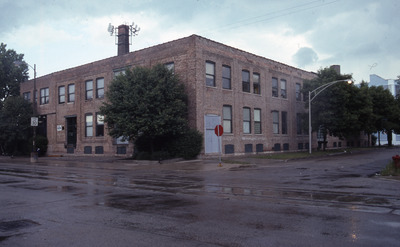
![[IL, Chicago. 19] Euston & Company Factory. 02 by Carl L. Thurman](https://scholarworks.uni.edu/sullivan_images/1040/thumbnail.jpg "[IL, Chicago. 19] Euston & Company Factory. 02 by Carl L. Thurman")
[IL, Chicago. 19] Euston & Company Factory. 02
1998
Alt Text: Angled view of a two story tan brick factory building with many windows, surrounded by trees. A smokestack towers over the building. Color image.
Louis Sullivan designed a linoleum plant for Alexander Euston of St. Louis next door to his 1899 linseed-oil factory on Chicago's near North Side. The building is also called the Riverside Seed & Cleaning Company.
-
![[IL, Chicago. 19] Euston & Company Factory. 03 by Carl L. Thurman](https://scholarworks.uni.edu/sullivan_images/1041/thumbnail.jpg "[IL, Chicago. 19] Euston & Company Factory. 03 by Carl L. Thurman")
[IL, Chicago. 19] Euston & Company Factory. 03
1998
Alt Text: Rear view of a two story tan brick factory building with a large parking lot with a handful of cars and surrounded by trees. A smokestack towers over the building. Color image.
Louis Sullivan designed a linoleum plant for Alexander Euston of St. Louis next door to his 1899 linseed-oil factory on Chicago's near North Side. The building is also called the Riverside Seed & Cleaning Company.
-
![[IL, Chicago. 20] Holy Trinity Cathedral. 01 by Carl L. Thurman](https://scholarworks.uni.edu/sullivan_images/1042/thumbnail.jpg "[IL, Chicago. 20] Holy Trinity Cathedral. 01 by Carl L. Thurman")
[IL, Chicago. 20] Holy Trinity Cathedral. 01
1998
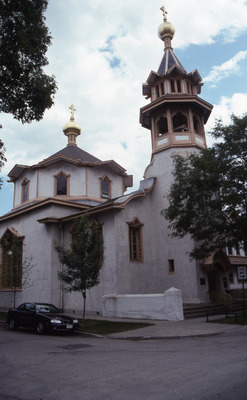
Alt Text: Exterior view of Holy Trinity Orthodox Cathedral. The structure features white stucco with a large second story dome as well as an ornate steeple with gold accents. Color image.
Holy Trinity Orthodox Cathedral is the cathedral church of the Orthodox Church in America Diocese of the Midwest. It is one of only two churches designed by Louis Sullivan.
-
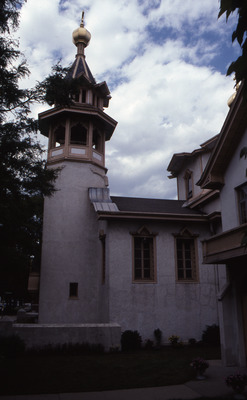
![[IL, Chicago. 20] Holy Trinity Cathedral. 02 by Carl L. Thurman](https://scholarworks.uni.edu/sullivan_images/1043/thumbnail.jpg "[IL, Chicago. 20] Holy Trinity Cathedral. 02 by Carl L. Thurman")
[IL, Chicago. 20] Holy Trinity Cathedral. 02
1998
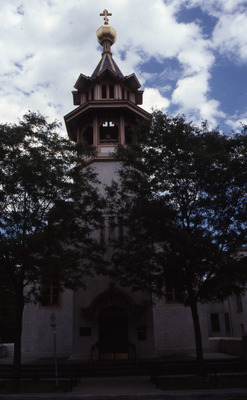
Alt Text: Hexagonal church steeple with several small windows surrounded by trees towers above a cathedral. Color image.
Holy Trinity Orthodox Cathedral is the cathedral church of the Orthodox Church in America Diocese of the Midwest. It is one of only two churches designed by Louis Sullivan.
-
![[IL, Chicago. 20] Holy Trinity Cathedral. 03 by Carl L. Thurman](https://scholarworks.uni.edu/sullivan_images/1044/thumbnail.jpg "[IL, Chicago. 20] Holy Trinity Cathedral. 03 by Carl L. Thurman")
[IL, Chicago. 20] Holy Trinity Cathedral. 03
1998
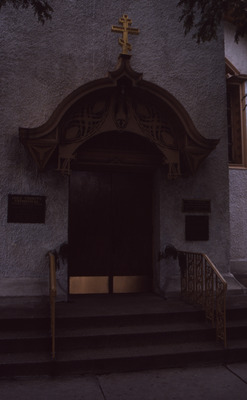
Alt Text: Cathedral entrance with ornate over-door carving and gold cross. Double doors have brass kick plates and a gold railing. Color image.
Holy Trinity Orthodox Cathedral is the cathedral church of the Orthodox Church in America Diocese of the Midwest. It is one of only two churches designed by Louis Sullivan.
-
![[IL, Chicago. 20] Holy Trinity Cathedral. 04 by Carl L. Thurman](https://scholarworks.uni.edu/sullivan_images/1045/thumbnail.jpg "[IL, Chicago. 20] Holy Trinity Cathedral. 04 by Carl L. Thurman")
[IL, Chicago. 20] Holy Trinity Cathedral. 04
1998
Alt Text: Hexagonal church steeple with several small windows surrounded by trees towers above a cathedral. Color image.
Holy Trinity Orthodox Cathedral is the cathedral church of the Orthodox Church in America Diocese of the Midwest. It is one of only two churches designed by Louis Sullivan.
-
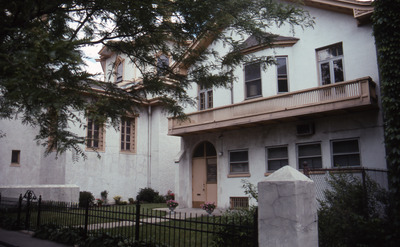
![[IL, Chicago. 20] Holy Trinity Cathedral. 05 by Carl L. Thurman](https://scholarworks.uni.edu/sullivan_images/1046/thumbnail.jpg "[IL, Chicago. 20] Holy Trinity Cathedral. 05 by Carl L. Thurman")
[IL, Chicago. 20] Holy Trinity Cathedral. 05
1998
Alt Text: Two story white stucco structure with tan accents and several windows and surrounded by trees. Color image.
Holy Trinity Orthodox Cathedral is the cathedral church of the Orthodox Church in America Diocese of the Midwest. It is one of only two churches designed by Louis Sullivan.
-
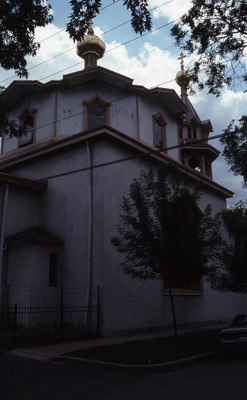
![[IL, Chicago. 20] Holy Trinity Cathedral. 06 by Carl L. Thurman](https://scholarworks.uni.edu/sullivan_images/1047/thumbnail.jpg "[IL, Chicago. 20] Holy Trinity Cathedral. 06 by Carl L. Thurman")
[IL, Chicago. 20] Holy Trinity Cathedral. 06
1998
Alt Text: Angled view of white stucco cathedral with gold spire topped with crosses and surrounded by trees. Color image.
Holy Trinity Orthodox Cathedral is the cathedral church of the Orthodox Church in America Diocese of the Midwest. It is one of only two churches designed by Louis Sullivan.
-
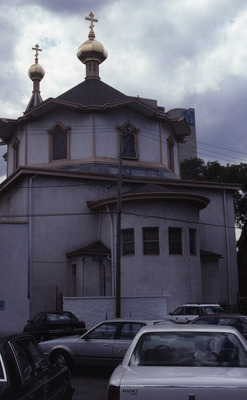
![[IL, Chicago. 20] Holy Trinity Cathedral. 07 by Carl L. Thurman](https://scholarworks.uni.edu/sullivan_images/1048/thumbnail.jpg "[IL, Chicago. 20] Holy Trinity Cathedral. 07 by Carl L. Thurman")
[IL, Chicago. 20] Holy Trinity Cathedral. 07
1998
Alt Text: Parking lot view of white stucco cathedral with dome trimmed in gold and topped by a gold cross spire. A steeple's golden cross spire stands in the background. Color image.
Holy Trinity Orthodox Cathedral is the cathedral church of the Orthodox Church in America Diocese of the Midwest. It is one of only two churches designed by Louis Sullivan.
-
![[IN, West Lafayette. 25] Purdue State Bank. 01 by Carl L. Thurman](https://scholarworks.uni.edu/sullivan_images/1067/thumbnail.jpg "[IN, West Lafayette. 25] Purdue State Bank. 01 by Carl L. Thurman")
[IN, West Lafayette. 25] Purdue State Bank. 01
1998
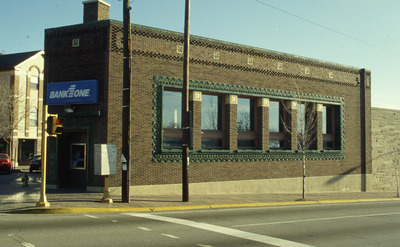
Alt Text: Small red brick bank with green glazed terra cotta trim and patterned brickwork in an urban setting. A blue sign reads "Bank One" above the entrance. Color image.
The Purdue State Bank Building located in West Lafayette, Indiana was designed by Louis Sullivan. Completed in 1914, the bank is the smallest and least expensive of Sullivan's "Jewel Boxes", a series of Midwestern banks.
-
![[IN, West Lafayette. 25] Purdue State Bank. 02 by Carl L. Thurman](https://scholarworks.uni.edu/sullivan_images/1068/thumbnail.jpg "[IN, West Lafayette. 25] Purdue State Bank. 02 by Carl L. Thurman")
[IN, West Lafayette. 25] Purdue State Bank. 02
1998
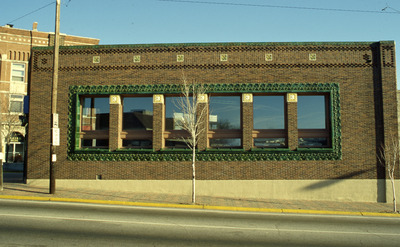
Alt Text: Street view of small red brick bank with green glazed terra cotta trim and patterned brickwork in an urban setting. Color image.
The Purdue State Bank Building located in West Lafayette, Indiana was designed by Louis Sullivan. Completed in 1914, the bank is the smallest and least expensive of Sullivan's "Jewel Boxes", a series of Midwestern banks.
-
![[IN, West Lafayette. 25] Purdue State Bank. 03 by Carl L. Thurman](https://scholarworks.uni.edu/sullivan_images/1069/thumbnail.jpg "[IN, West Lafayette. 25] Purdue State Bank. 03 by Carl L. Thurman")
[IN, West Lafayette. 25] Purdue State Bank. 03
1998
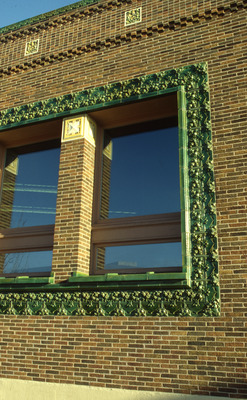
Alt Text: Close up of a red brick building window featuring green glazed terra cotta trim and patterned brickwork. Color image.
The Purdue State Bank Building located in West Lafayette, Indiana was designed by Louis Sullivan. Completed in 1914, the bank is the smallest and least expensive of Sullivan's "Jewel Boxes", a series of Midwestern banks.
-
![[IN, West Lafayette. 25] Purdue State Bank. 04 by Carl L. Thurman](https://scholarworks.uni.edu/sullivan_images/1070/thumbnail.jpg "[IN, West Lafayette. 25] Purdue State Bank. 04 by Carl L. Thurman")
[IN, West Lafayette. 25] Purdue State Bank. 04
1998
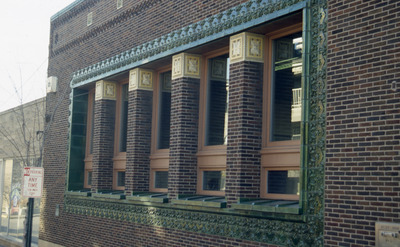
Alt Text: Angled view of red brick building windows featuring green glazed terra cotta trim and patterned brickwork. A 'No Parking' sign stands to the left of the photo. Color image.
The Purdue State Bank Building located in West Lafayette, Indiana was designed by Louis Sullivan. Completed in 1914, the bank is the smallest and least expensive of Sullivan's "Jewel Boxes", a series of Midwestern banks.
-
![[IN, West Lafayette. 25] Purdue State Bank. 05 by Carl L. Thurman](https://scholarworks.uni.edu/sullivan_images/1071/thumbnail.jpg "[IN, West Lafayette. 25] Purdue State Bank. 05 by Carl L. Thurman")
[IN, West Lafayette. 25] Purdue State Bank. 05
1998
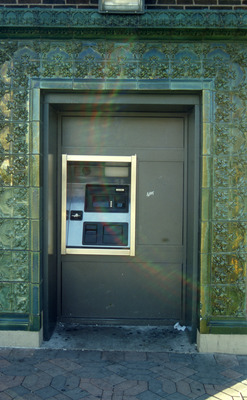
Alt Text: Built-in ATM machine sits in an reconfigured doorway surrounded by ornate green glazed terra cotta trim. Color image.
The Purdue State Bank Building located in West Lafayette, Indiana was designed by Louis Sullivan. Completed in 1914, the bank is the smallest and least expensive of Sullivan's "Jewel Boxes", a series of Midwestern banks.
-
![[MN, Owatonna. 28] National Farmers' Bank. 01 by Carl L. Thurman](https://scholarworks.uni.edu/sullivan_images/1083/thumbnail.jpg "[MN, Owatonna. 28] National Farmers' Bank. 01 by Carl L. Thurman")
[MN, Owatonna. 28] National Farmers' Bank. 01
2001
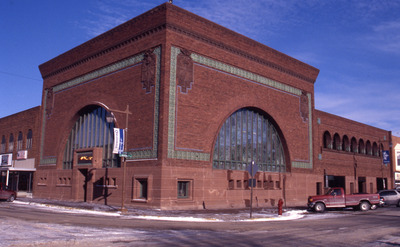
Alt Text: Large two-story red brick building on a street corner, with two arched stained glass windows, contrasting with green and brown terra cotta panels and blue and gold glass mosaic bands. Color image.
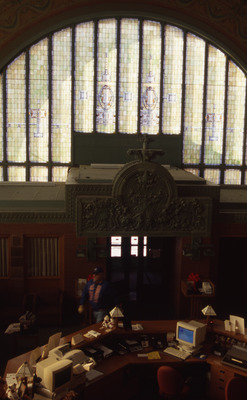
The National Farmers' Bank of Owatonna, Minnesota, United States, is a historic bank building designed by Louis Sullivan, with decorative elements by George Elmslie. It was built in 1908.
-
![[MN, Owatonna. 28] National Farmers' Bank. 02 by Carl L. Thurman](https://scholarworks.uni.edu/sullivan_images/1084/thumbnail.jpg "[MN, Owatonna. 28] National Farmers' Bank. 02 by Carl L. Thurman")
[MN, Owatonna. 28] National Farmers' Bank. 02
2001
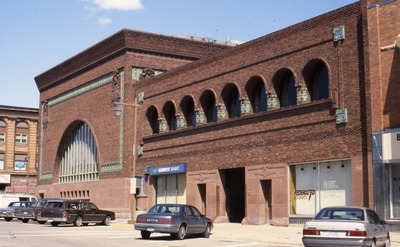
Alt Text: Several cars park near a two story red brick bank with a large arched stained glass window, and several smaller arched windows on the second floor of the building. Features green terra cotta bands and patterned brickwork. Color image.
The National Farmers' Bank of Owatonna, Minnesota, United States, is a historic bank building designed by Louis Sullivan, with decorative elements by George Elmslie. It was built in 1908.
-
![[MN, Owatonna. 28] National Farmers' Bank. 03 by Carl L. Thurman](https://scholarworks.uni.edu/sullivan_images/1085/thumbnail.jpg "[MN, Owatonna. 28] National Farmers' Bank. 03 by Carl L. Thurman")
[MN, Owatonna. 28] National Farmers' Bank. 03
2001
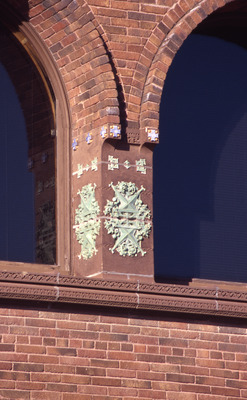
Alt Text: Close up of an red brick building windows featuring arches and blue, green and gold decorative elements on a central column between the arches. Color image.
The National Farmers' Bank of Owatonna, Minnesota, United States, is a historic bank building designed by Louis Sullivan, with decorative elements by George Elmslie. It was built in 1908.
-
![[MN, Owatonna. 28] National Farmers' Bank. 04 by Carl L. Thurman](https://scholarworks.uni.edu/sullivan_images/1086/thumbnail.jpg "[MN, Owatonna. 28] National Farmers' Bank. 04 by Carl L. Thurman")
[MN, Owatonna. 28] National Farmers' Bank. 04
2001
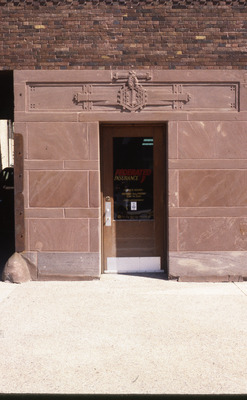
Alt Text: Close up of entrance to a red brick building, with red decorative sandstone facade featuring an ornate carving above the entrance. A sign on the wood and glass door reads, 'Federated Insurance'.Color image.
The National Farmers' Bank of Owatonna, Minnesota, United States, is a historic bank building designed by Louis Sullivan, with decorative elements by George Elmslie. It was built in 1908.
-
![[MN, Owatonna. 28] National Farmers' Bank. 05 by Carl L. Thurman](https://scholarworks.uni.edu/sullivan_images/1087/thumbnail.jpg "[MN, Owatonna. 28] National Farmers' Bank. 05 by Carl L. Thurman")
[MN, Owatonna. 28] National Farmers' Bank. 05
2001
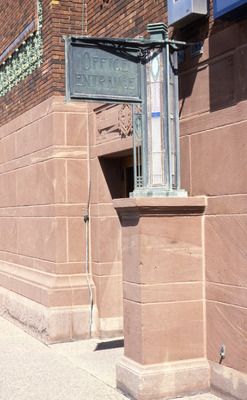
Alt Text: Side entrance of a red brick building with a red sandstone base. An metal oxidized exterior sign mounted on a pillar reads "Office Entrance". Color image.
The National Farmers' Bank of Owatonna, Minnesota, United States, is a historic bank building designed by Louis Sullivan, with decorative elements by George Elmslie. It was built in 1908.
-
![[MN, Owatonna. 28] National Farmers' Bank. 06 by Carl L. Thurman](https://scholarworks.uni.edu/sullivan_images/1088/thumbnail.jpg "[MN, Owatonna. 28] National Farmers' Bank. 06 by Carl L. Thurman")
[MN, Owatonna. 28] National Farmers' Bank. 06
2001
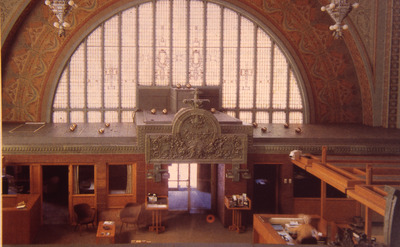
Alt Text: Interior view of a bank entrance with a large, arched stained glass window flanked with colorful mosaic tile. Entrance features ornate stone carving and red brick and wood trim in a bank setting. Color image.
The National Farmers' Bank of Owatonna, Minnesota, United States, is a historic bank building designed by Louis Sullivan, with decorative elements by George Elmslie. It was built in 1908.
-
![[MN, Owatonna. 28] National Farmers' Bank. 07 by Carl L. Thurman](https://scholarworks.uni.edu/sullivan_images/1089/thumbnail.jpg "[MN, Owatonna. 28] National Farmers' Bank. 07 by Carl L. Thurman")
[MN, Owatonna. 28] National Farmers' Bank. 07
2001
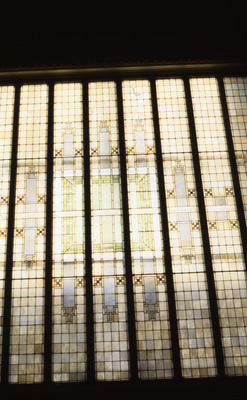
Alt Text: Close up, interior view of barred stained glass windows featuring green, gold, and blue accents. Color image.
The National Farmers' Bank of Owatonna, Minnesota, United States, is a historic bank building designed by Louis Sullivan, with decorative elements by George Elmslie. It was built in 1908.
-
![[MN, Owatonna. 28] National Farmers' Bank. 08 by Carl L. Thurman](https://scholarworks.uni.edu/sullivan_images/1090/thumbnail.jpg "[MN, Owatonna. 28] National Farmers' Bank. 08 by Carl L. Thurman")
[MN, Owatonna. 28] National Farmers' Bank. 08
2001
Alt Text: Interior view of a bank entrance with a large, arched stained glass window flanked with colorful painted designs. Entrance features ornate stone carving and red brick and wood trim in a bank setting. Color image.
The National Farmers' Bank of Owatonna, Minnesota, United States, is a historic bank building designed by Louis Sullivan, with decorative elements by George Elmslie. It was built in 1908.
-
![[MN, Owatonna. 28] National Farmers' Bank. 09 by Carl L. Thurman](https://scholarworks.uni.edu/sullivan_images/1091/thumbnail.jpg "[MN, Owatonna. 28] National Farmers' Bank. 09 by Carl L. Thurman")
[MN, Owatonna. 28] National Farmers' Bank. 09
2001
Alt Text: Interior corner ceiling view of a large structure flanked by arched stained glass windows, including a ceiling window. Ornate metal chandeliers hang from the ceiling. Color image.
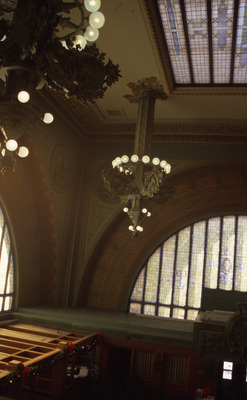
The National Farmers' Bank of Owatonna, Minnesota, United States, is a historic bank building designed by Louis Sullivan, with decorative elements by George Elmslie. It was built in 1908.
-
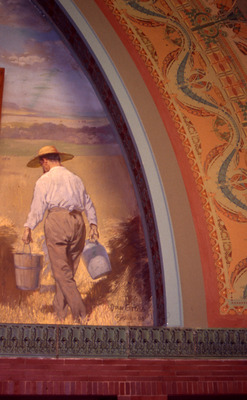
![[MN, Owatonna. 28] National Farmers' Bank. 10 by Carl L. Thurman](https://scholarworks.uni.edu/sullivan_images/1092/thumbnail.jpg "[MN, Owatonna. 28] National Farmers' Bank. 10 by Carl L. Thurman")
[MN, Owatonna. 28] National Farmers' Bank. 10
2001
Alt Text: Close up of an ornate chandelier with multiple illuminated bulbs, suspended from a decorative ceiling. Color image.
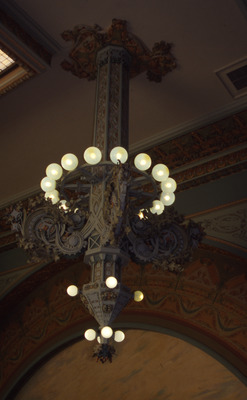
The National Farmers' Bank of Owatonna, Minnesota, United States, is a historic bank building designed by Louis Sullivan, with decorative elements by George Elmslie. It was built in 1908.
-
![[MN, Owatonna. 28] National Farmers' Bank. 11 by Carl L. Thurman](https://scholarworks.uni.edu/sullivan_images/1093/thumbnail.jpg "[MN, Owatonna. 28] National Farmers' Bank. 11 by Carl L. Thurman")
[MN, Owatonna. 28] National Farmers' Bank. 11
2001
Alt Text: Arched painted mural of dairy cattle in a field. Surrounded by intricate mosaic tile archway. Intricate chandeliers hang on either side of the mural. Color image.
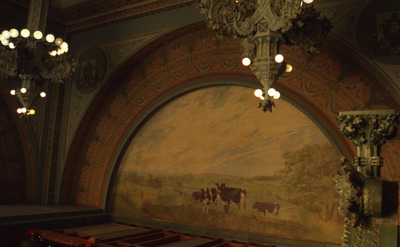
The National Farmers' Bank of Owatonna, Minnesota, United States, is a historic bank building designed by Louis Sullivan, with decorative elements by George Elmslie. It was built in 1908.
-
![[MN, Owatonna. 28] National Farmers' Bank. 12 by Carl L. Thurman](https://scholarworks.uni.edu/sullivan_images/1094/thumbnail.jpg "[MN, Owatonna. 28] National Farmers' Bank. 12 by Carl L. Thurman")
[MN, Owatonna. 28] National Farmers' Bank. 12
2001
Alt Text: Partial shot of a painted mural featuring a farmer wearing a wide brimmed hat carrying two buckets. The mural is flanked by a curved archway with painted red, orange, blue, and tan designs. Color image.
The National Farmers' Bank of Owatonna, Minnesota, United States, is a historic bank building designed by Louis Sullivan, with decorative elements by George Elmslie. It was built in 1908.
-
![[MO, St. Louis. 34] Wainwright Building. 01 by Carl L. Thurman](https://scholarworks.uni.edu/sullivan_images/1135/thumbnail.jpg "[MO, St. Louis. 34] Wainwright Building. 01 by Carl L. Thurman")
[MO, St. Louis. 34] Wainwright Building. 01
2009
Alt Text: Corner view of a large tan brick municipal building with rows of small windows on each of nine floors in an urban setting. Color image.
The Wainwright Building located at 701 Chestnut Street in St. Louis was designed by the famed architects Adler and Sullivan in 1891. The Wainwright building is credited for being the first successful utilization of steel frame construction.
-
![[MO, St. Louis. 34] Wainwright Building. 02 by Carl L. Thurman](https://scholarworks.uni.edu/sullivan_images/1136/thumbnail.jpg "[MO, St. Louis. 34] Wainwright Building. 02 by Carl L. Thurman")
[MO, St. Louis. 34] Wainwright Building. 02
2009
Alt Text: Corner view of a large tan brick municipal building with rows of small windows on each of nine floors in an urban setting, with other buildings towering in the background. Color image.
The Wainwright Building located at 701 Chestnut Street in St. Louis was designed by the famed architects Adler and Sullivan in 1891. The Wainwright building is credited for being the first successful utilization of steel frame construction.
-
![[MO, St. Louis. 34] Wainwright Building. 03 by Carl L. Thurman](https://scholarworks.uni.edu/sullivan_images/1137/thumbnail.jpg "[MO, St. Louis. 34] Wainwright Building. 03 by Carl L. Thurman")
[MO, St. Louis. 34] Wainwright Building. 03
2009
Alt Text: Angled view of windows and decorative facade of multiple story red brick municipal building. Color image.
The Wainwright Building located at 701 Chestnut Street in St. Louis was designed by the famed architects Adler and Sullivan in 1891. The Wainwright building is credited for being the first successful utilization of steel frame construction.
-
![[MO, St. Louis. 34] Wainwright Building. 04 by Carl L. Thurman](https://scholarworks.uni.edu/sullivan_images/1138/thumbnail.jpg "[MO, St. Louis. 34] Wainwright Building. 04 by Carl L. Thurman")
[MO, St. Louis. 34] Wainwright Building. 04
2009
Alt Text: Nine-story red brick building shares a city block with another three-story red brick office building surrounded by other high-rise buildings in an urban area. Color image.
The Wainwright Building located at 701 Chestnut Street in St. Louis was designed by the famed architects Adler and Sullivan in 1891. The Wainwright building is credited for being the first successful utilization of steel frame construction.
-
![[MO, St. Louis. 35] Wainwright Tomb. 01 by Carl L. Thurman](https://scholarworks.uni.edu/sullivan_images/1127/thumbnail.jpg "[MO, St. Louis. 35] Wainwright Tomb. 01 by Carl L. Thurman")
[MO, St. Louis. 35] Wainwright Tomb. 01
1989
Alt Text: Gray stone mausoleum featuring a dome, intricate carved stone facade and an oxidized metal entrance sits in a cemetery surrounded by trees and grass. Color image.
The Wainwright Tomb is a mausoleum located in Bellefontaine Cemetery in St. Louis, Missouri. Originally constructed for Charlotte Dickson Wainwright in 1892, the tomb also contains the remains of her husband, Ellis Wainwright. The mausoleum was designed by Louis Sullivan, who also designed the Wainwright Building for Ellis Wainwright.
-
![[MO, St. Louis. 35] Wainwright Tomb. 02 by Carl L. Thurman](https://scholarworks.uni.edu/sullivan_images/1128/thumbnail.jpg "[MO, St. Louis. 35] Wainwright Tomb. 02 by Carl L. Thurman")
[MO, St. Louis. 35] Wainwright Tomb. 02
1989
Alt Text: Gray stone mausoleum with intricate stonework facade and blue oxidized double gate doors at the entrance. Color image.
The Wainwright Tomb is a mausoleum located in Bellefontaine Cemetery in St. Louis, Missouri. Originally constructed for Charlotte Dickson Wainwright in 1892, the tomb also contains the remains of her husband, Ellis Wainwright. The mausoleum was designed by Louis Sullivan, who also designed the Wainwright Building for Ellis Wainwright.
-
![[MO, St. Louis. 35] Wainwright Tomb. 03 by Carl L. Thurman](https://scholarworks.uni.edu/sullivan_images/1129/thumbnail.jpg "[MO, St. Louis. 35] Wainwright Tomb. 03 by Carl L. Thurman")
[MO, St. Louis. 35] Wainwright Tomb. 03
1989
Alt Text: Gray stone mausoleum with intricate stonework facade and blue oxidized double gate doors at the entrance. Color image.
The Wainwright Tomb is a mausoleum located in Bellefontaine Cemetery in St. Louis, Missouri. Originally constructed for Charlotte Dickson Wainwright in 1892, the tomb also contains the remains of her husband, Ellis Wainwright. The mausoleum was designed by Louis Sullivan, who also designed the Wainwright Building for Ellis Wainwright.
-
![[MO, St. Louis. 35] Wainwright Tomb. 04 by Carl L. Thurman](https://scholarworks.uni.edu/sullivan_images/1130/thumbnail.jpg "[MO, St. Louis. 35] Wainwright Tomb. 04 by Carl L. Thurman")
[MO, St. Louis. 35] Wainwright Tomb. 04
1989
Alt Text: Gray stone mausoleum featuring intricate stonework carved facade and oxidized window grate. A stone dome sits on top of the structure. Color image.
The Wainwright Tomb is a mausoleum located in Bellefontaine Cemetery in St. Louis, Missouri. Originally constructed for Charlotte Dickson Wainwright in 1892, the tomb also contains the remains of her husband, Ellis Wainwright. The mausoleum was designed by Louis Sullivan, who also designed the Wainwright Building for Ellis Wainwright.
-
![[MO, St. Louis. 36] Union Trust Building. 01 by Carl L. Thurman](https://scholarworks.uni.edu/sullivan_images/1131/thumbnail.jpg "[MO, St. Louis. 36] Union Trust Building. 01 by Carl L. Thurman")
[MO, St. Louis. 36] Union Trust Building. 01
1989
Alt Text: Twelve story tan Flemish-Gothic style office building with multiple rows of windows featuring a recessed atrium. A diamond store and a Federal Express station inhabit the ground floor. Color image.
The Union Trust building located in St. Louis at 705 Olive was constructed in 1892. This structure, built in a "U" shaped plan with two wings surrounding a central light court, was designed by Louis Sullivan's firm immediately after their famous Wainwright Building.
-
![[MO, St. Louis. 36] Union Trust Building. 02 by Carl L. Thurman](https://scholarworks.uni.edu/sullivan_images/1132/thumbnail.jpg "[MO, St. Louis. 36] Union Trust Building. 02 by Carl L. Thurman")
[MO, St. Louis. 36] Union Trust Building. 02
1989
Alt Text: Ground floor office building entrance, featuring decorative white brick and stone arched entrance with three glass doors. The number 705 is displayed on the arched glass window. A Federal Express storefront sits next to the entrance. Color image.
The Union Trust building located in St. Louis at 705 Olive was constructed in 1892. This structure, built in a "U" shaped plan with two wings surrounding a central light court, was designed by Louis Sullivan's firm immediately after their famous Wainwright Building.
-
![[MO, St. Louis. 36] Union Trust Building. 03 by Carl L. Thurman](https://scholarworks.uni.edu/sullivan_images/1133/thumbnail.jpg "[MO, St. Louis. 36] Union Trust Building. 03 by Carl L. Thurman")
[MO, St. Louis. 36] Union Trust Building. 03
1989
Alt Text: Tan stone and brick building with distinctive circular window design. Other rows of windows flank the second and third floors. Color image.
The Union Trust building located in St. Louis at 705 Olive was constructed in 1892. This structure, built in a "U" shaped plan with two wings surrounding a central light court, was designed by Louis Sullivan's firm immediately after their famous Wainwright Building.
-
![[MO, St. Louis. 36] Union Trust Building. 04 by Carl L. Thurman](https://scholarworks.uni.edu/sullivan_images/1134/thumbnail.jpg "[MO, St. Louis. 36] Union Trust Building. 04 by Carl L. Thurman")
[MO, St. Louis. 36] Union Trust Building. 04
1989
Alt Text: Tan stone building facade with windows tucked between columns and featuring ornate decorative stone cornice and a row of carved stone lions' heads adjacent to the columns Color image.
The Union Trust building located in St. Louis at 705 Olive was constructed in 1892. This structure, built in a "U" shaped plan with two wings surrounding a central light court, was designed by Louis Sullivan's firm immediately after their famous Wainwright Building.
-
![[NY, Buffalo. 21] Guarranty Building. 01 by Carl L. Thurman](https://scholarworks.uni.edu/sullivan_images/1051/thumbnail.jpg "[NY, Buffalo. 21] Guarranty Building. 01 by Carl L. Thurman")
[NY, Buffalo. 21] Guarranty Building. 01
1997
Alt Text: Angled view of 12 story red brick office building with rows of windows on each floor. Another high-rise structure with communication equipment on the roof stands in the background. Color image.
The Guarranty Building, formerly called the Prudential Building, is an early skyscraper in Buffalo, New York. It was designed by Louis Sullivan and Dankmar Adler and completed in 1896.
-
![[NY, Buffalo. 21] Guarranty Building. 02 by Carl L. Thurman](https://scholarworks.uni.edu/sullivan_images/1052/thumbnail.jpg "[NY, Buffalo. 21] Guarranty Building. 02 by Carl L. Thurman")
[NY, Buffalo. 21] Guarranty Building. 02
1997
Alt Text: Exterior view of a tan high rise office building includes intricate terra cotta facade between rows of multiple windows on each floor. Color image.
The Guarranty Building, formerly called the Prudential Building, is an early skyscraper in Buffalo, New York. It was designed by Louis Sullivan and Dankmar Adler and completed in 1896.
-
![[NY, Buffalo. 21] Guarranty Building. 03 by Carl L. Thurman](https://scholarworks.uni.edu/sullivan_images/1053/thumbnail.jpg "[NY, Buffalo. 21] Guarranty Building. 03 by Carl L. Thurman")
[NY, Buffalo. 21] Guarranty Building. 03
1997
Alt Text: Upper portion of a brown high rise structure with terra cotta facade with prominent cornice. Communications equipment towers from an adjacent building. Color image.
The Guarranty Building, formerly called the Prudential Building, is an early skyscraper in Buffalo, New York. It was designed by Louis Sullivan and Dankmar Adler and completed in 1896.
-
![[NY, Buffalo. 21] Guarranty Building. 04 by Carl L. Thurman](https://scholarworks.uni.edu/sullivan_images/1054/thumbnail.jpg "[NY, Buffalo. 21] Guarranty Building. 04 by Carl L. Thurman")
[NY, Buffalo. 21] Guarranty Building. 04
1997
Alt Text: Street view of a brown multi-story building with ornate terracotta facade, with arched entrance and large glass display windows on the ground floor. Several cars are parked in front of the building. Color image.
The Guarranty Building, formerly called the Prudential Building, is an early skyscraper in Buffalo, New York. It was designed by Louis Sullivan and Dankmar Adler and completed in 1896.
-
![[NY, Buffalo. 21] Guarranty Building. 05 by Carl L. Thurman](https://scholarworks.uni.edu/sullivan_images/1055/thumbnail.jpg "[NY, Buffalo. 21] Guarranty Building. 05 by Carl L. Thurman")
[NY, Buffalo. 21] Guarranty Building. 05
1997
Alt Text: Internal view of decorative terra cotta column adorned with intricate geometric patterns. Color image.
The Guarranty Building, formerly called the Prudential Building, is an early skyscraper in Buffalo, New York. It was designed by Louis Sullivan and Dankmar Adler and completed in 1896.
-
![[NY, Buffalo. 21] Guarranty Building. 06 by Carl L. Thurman](https://scholarworks.uni.edu/sullivan_images/1056/thumbnail.jpg "[NY, Buffalo. 21] Guarranty Building. 06 by Carl L. Thurman")
[NY, Buffalo. 21] Guarranty Building. 06
1997
Alt Text: Decorative terra cotta column featuring intricate geometric and floral patterns. A vertical, cylindrical light fixture is attached to the column. Color image.
The Guarranty Building, formerly called the Prudential Building, is an early skyscraper in Buffalo, New York. It was designed by Louis Sullivan and Dankmar Adler and completed in 1896.
-
![[NY, Manhattan. 22] Bayard-Condict Building. 01 by Carl L. Thurman](https://scholarworks.uni.edu/sullivan_images/1049/thumbnail.jpg "[NY, Manhattan. 22] Bayard-Condict Building. 01 by Carl L. Thurman")
[NY, Manhattan. 22] Bayard-Condict Building. 01
1997
Alt Text: Entrance to a brown building featuring arched window and ornate terracotta facade. 'Prudential' is visible between the arched window and the glass-door entrance below. A blue truck is parked near the entrance, with people sitting and standing next to it. Color image
The Bayard-Condict Building is the only structure in New York City designed by Louis Sullivan and is one of the first skyscrapers erected in the city.
-
![[NY, Manhattan. 22] Bayard-Condict Building. 02 by Carl L. Thurman](https://scholarworks.uni.edu/sullivan_images/1050/thumbnail.jpg "[NY, Manhattan. 22] Bayard-Condict Building. 02 by Carl L. Thurman")
[NY, Manhattan. 22] Bayard-Condict Building. 02
1997
Alt Text: Entrance to a high rise building featuring intricate stone carvings around the vestibule. Color image.
The Bayard-Condict Building is the only structure in New York City designed by Louis Sullivan and is one of the first skyscrapers erected in the city.
-
![[OH, Newark. 23] Home Building Association Bank. 01 by Carl L. Thurman](https://scholarworks.uni.edu/sullivan_images/1057/thumbnail.jpg "[OH, Newark. 23] Home Building Association Bank. 01 by Carl L. Thurman")
[OH, Newark. 23] Home Building Association Bank. 01
2001
Alt Text: One-story brown brick entrance flanked by intricate stone carvings sitting on top of brick and stone pillars and smaller windows. Color image.
The Home Building Association Company, commonly known as “The Old Home” is located on the Courthouse Square in Newton, Ohio. It is one of only eight banks designed by noted American architect Louis Sullivan.
-
![[OH, Newark. 23] Home Building Association Bank. 02 by Carl L. Thurman](https://scholarworks.uni.edu/sullivan_images/1058/thumbnail.jpg "[OH, Newark. 23] Home Building Association Bank. 02 by Carl L. Thurman")
[OH, Newark. 23] Home Building Association Bank. 02
2001
Alt Text: Two story gray stone building featuring intricate ornamentation and decorative stone carvings. Blue, red, and tan architectural signage above the first floor reads 'The Old Home'. A neon sign in the first floor window reads 'Homemade Ice Cream.' Color image.
The Home Building Association Company, commonly known as “The Old Home” is located on the Courthouse Square in Newton, Ohio. It is one of only eight banks designed by noted American architect Louis Sullivan.
-
![[OH, Newark. 23] Home Building Association Bank. 03 by Carl L. Thurman](https://scholarworks.uni.edu/sullivan_images/1059/thumbnail.jpg "[OH, Newark. 23] Home Building Association Bank. 03 by Carl L. Thurman")
[OH, Newark. 23] Home Building Association Bank. 03
2001
Alt Text: Close up, street view image of building facade with intricate terra cotta tile and and blue, red, and brown mosaic tile architectural signage reading "The Old Home". A business entrance below the sign features glass door adjacent to a large window. Color image.
The Home Building Association Company, commonly known as “The Old Home” is located on the Courthouse Square in Newton, Ohio. It is one of only eight banks designed by noted American architect Louis Sullivan.
-
![[OH, Sidney, 24] People's Saving and Loan Association Bank. 01 by Carl L. Thurman](https://scholarworks.uni.edu/sullivan_images/1060/thumbnail.jpg "[OH, Sidney, 24] People's Saving and Loan Association Bank. 01 by Carl L. Thurman")
[OH, Sidney, 24] People's Saving and Loan Association Bank. 01
1998
Alt Text: Corner view of two-story red brick building with decorative stone columns and cornice, featuring a large, blue mosaic tile in the tympanum. Street lights and traffic signals stand in front of the building. Color image.
The People's Federal Savings and Loan Association is a historic bank building at 101 East Court Street in Sidney, Ohio, designed by Chicago architect Louis Sullivan. It was designed and built in 1917.
-
![[OH, Sidney, 24] People's Saving and Loan Association Bank. 02 by Carl L. Thurman](https://scholarworks.uni.edu/sullivan_images/1061/thumbnail.jpg "[OH, Sidney, 24] People's Saving and Loan Association Bank. 02 by Carl L. Thurman")
[OH, Sidney, 24] People's Saving and Loan Association Bank. 02
1998
Alt Text: Two-story red brick building with decorative stone columns and blue glass mosaic tile windows between long, carved stone columns. Features intricate stone carvings and architectural signage that reads, '1886, The Peoples Savings & Loan Association, 1917'. Color image.
The People's Federal Savings and Loan Association is a historic bank building at 101 East Court Street in Sidney, Ohio, designed by Chicago architect Louis Sullivan. It was designed and built in 1917.
-
![[OH, Sidney, 24] People's Saving and Loan Association Bank. 03 by Carl L. Thurman](https://scholarworks.uni.edu/sullivan_images/1062/thumbnail.jpg "[OH, Sidney, 24] People's Saving and Loan Association Bank. 03 by Carl L. Thurman")
[OH, Sidney, 24] People's Saving and Loan Association Bank. 03
1998
Alt Text: Two-story red brick structure featuring Syrian arch with blue glass mosaic in its tympanum and reads 'Thrift'. Double door entrance is flanked by a single window on each side. Architectural signage reads 'Peoples Federal Savings and Loan Assn.' is displayed directly over the arch. Color image.
The People's Federal Savings and Loan Association is a historic bank building at 101 East Court Street in Sidney, Ohio, designed by Chicago architect Louis Sullivan. It was designed and built in 1917.
-
![[OH, Sidney, 24] People's Saving and Loan Association Bank. 04 by Carl L. Thurman](https://scholarworks.uni.edu/sullivan_images/1063/thumbnail.jpg "[OH, Sidney, 24] People's Saving and Loan Association Bank. 04 by Carl L. Thurman")
[OH, Sidney, 24] People's Saving and Loan Association Bank. 04
1998
Alt Text: Main entrance of a red brick building with gold doors and intricate carved stone facade. Blue glass mosaic tile surrounds heraldic lions framing the word 'THRIFT'. Color image.
The People's Federal Savings and Loan Association is a historic bank building at 101 East Court Street in Sidney, Ohio, designed by Chicago architect Louis Sullivan. It was designed and built in 1917.
-
![[OH, Sidney, 24] People's Saving and Loan Association Bank. 05 by Carl L. Thurman](https://scholarworks.uni.edu/sullivan_images/1064/thumbnail.jpg "[OH, Sidney, 24] People's Saving and Loan Association Bank. 05 by Carl L. Thurman")
[OH, Sidney, 24] People's Saving and Loan Association Bank. 05
1998
Alt Text: Close up of a building entrance facade featuring gold doors, intricately carved stone, a heraldic lion, and blue glass mosaic tile surrounding the words 'THRIFT'. Color image.
The People's Federal Savings and Loan Association is a historic bank building at 101 East Court Street in Sidney, Ohio, designed by Chicago architect Louis Sullivan. It was designed and built in 1917.
-
![[OH, Sidney, 24] People's Saving and Loan Association Bank. 06 by Carl L. Thurman](https://scholarworks.uni.edu/sullivan_images/1065/thumbnail.jpg "[OH, Sidney, 24] People's Saving and Loan Association Bank. 06 by Carl L. Thurman")
[OH, Sidney, 24] People's Saving and Loan Association Bank. 06
1998
Alt Text: Close up of carved stone columns with blue and green stained glass windows on a red brick building. Carved stone chimeras sit below each window column. Color image.
The People's Federal Savings and Loan Association is a historic bank building at 101 East Court Street in Sidney, Ohio, designed by Chicago architect Louis Sullivan. It was designed and built in 1917.
-
![[OH, Sidney, 24] People's Saving and Loan Association Bank. 07 by Carl L. Thurman](https://scholarworks.uni.edu/sullivan_images/1066/thumbnail.jpg "[OH, Sidney, 24] People's Saving and Loan Association Bank. 07 by Carl L. Thurman")
[OH, Sidney, 24] People's Saving and Loan Association Bank. 07
1998
Alt Text: Detailed view of exterior stone architectural ornamentation featuring intricate floral designs with a shell-like base. A lion chimera sits adjacent to the ornament. Color image.
The People's Federal Savings and Loan Association is a historic bank building at 101 East Court Street in Sidney, Ohio, designed by Chicago architect Louis Sullivan. It was designed and built in 1917.
-
![[WI, Columbus, 26] Farmers and Merchants Union Bank. 01 by Carl L. Thurman](https://scholarworks.uni.edu/sullivan_images/1072/thumbnail.jpg "[WI, Columbus, 26] Farmers and Merchants Union Bank. 01 by Carl L. Thurman")
[WI, Columbus, 26] Farmers and Merchants Union Bank. 01
2002
Alt Text: Close up of red brick structure featuring arched glass window, carved marble lintel and ornate stone carvings, including lion chimeras on the facade. Architectural signage reads 'Farmers & Merchants Union Bank, Louis H. Sullivan, Architect' on black variegated marble. Color image.
The Farmers and Merchants Union Bank built in 1919 and located at 159 West James Street in Columbus, Wisconsin was designed by Louis Sullivan. It is the last of eight "jewel box" bank buildings designed by Louis Sullivan, and the next to last to be constructed.
-
![[WI, Columbus, 26] Farmers and Merchants Union Bank. 02 by Carl L. Thurman](https://scholarworks.uni.edu/sullivan_images/1073/thumbnail.jpg "[WI, Columbus, 26] Farmers and Merchants Union Bank. 02 by Carl L. Thurman")
[WI, Columbus, 26] Farmers and Merchants Union Bank. 02
2002
Alt Text: Corner view of Farmers & Merchants Union jewel box bank, featuring arched glass window, ornate stone carved facade and five arched windows along the side of the building. Color image.
The Farmers and Merchants Union Bank built in 1919 and located at 159 West James Street in Columbus, Wisconsin was designed by Louis Sullivan. It is the last of eight "jewel box" bank buildings designed by Louis Sullivan, and the next to last to be constructed.
-
![[WI, Columbus, 26] Farmers and Merchants Union Bank. 03 by Carl L. Thurman](https://scholarworks.uni.edu/sullivan_images/1074/thumbnail.jpg "[WI, Columbus, 26] Farmers and Merchants Union Bank. 03 by Carl L. Thurman")
[WI, Columbus, 26] Farmers and Merchants Union Bank. 03
2002
Alt Text: One story brown brick entrance flanked by intricate stone carvings sitting on top of brick and stone pillars and smaller windows. Color image.
The Farmers and Merchants Union Bank built in 1919 and located at 159 West James Street in Columbus, Wisconsin was designed by Louis Sullivan. It is the last of eight "jewel box" bank buildings designed by Louis Sullivan, and the next to last to be constructed.
-
![[WI, Columbus, 26] Farmers and Merchants Union Bank. 04 by Carl L. Thurman](https://scholarworks.uni.edu/sullivan_images/1075/thumbnail.jpg "[WI, Columbus, 26] Farmers and Merchants Union Bank. 04 by Carl L. Thurman")
[WI, Columbus, 26] Farmers and Merchants Union Bank. 04
2002
Alt Text: Detailed architectural sculpture of an eagle with outstretched wings, perched on a decorative base and placed near the ornately carved cornice. Color image.
The Farmers and Merchants Union Bank built in 1919 and located at 159 West James Street in Columbus, Wisconsin was designed by Louis Sullivan. It is the last of eight "jewel box" bank buildings designed by Louis Sullivan, and the next to last to be constructed.
-
![[WI, Columbus, 26] Farmers and Merchants Union Bank. 05 by Carl L. Thurman](https://scholarworks.uni.edu/sullivan_images/1076/thumbnail.jpg "[WI, Columbus, 26] Farmers and Merchants Union Bank. 05 by Carl L. Thurman")
[WI, Columbus, 26] Farmers and Merchants Union Bank. 05
2002
Alt Text: Close up of a decorative corbel attached to the building's exterior red brick facade. Color image.
The Farmers and Merchants Union Bank built in 1919 and located at 159 West James Street in Columbus, Wisconsin was designed by Louis Sullivan. It is the last of eight "jewel box" bank buildings designed by Louis Sullivan, and the next to last to be constructed.
-
![[WI, Columbus, 26] Farmers and Merchants Union Bank. 06 by Carl L. Thurman](https://scholarworks.uni.edu/sullivan_images/1077/thumbnail.jpg "[WI, Columbus, 26] Farmers and Merchants Union Bank. 06 by Carl L. Thurman")
[WI, Columbus, 26] Farmers and Merchants Union Bank. 06
2002
Alt Text: Close up of of a red brick building highlighting an arched stained glass window and surrounding ornate facade. Color image.
The Farmers and Merchants Union Bank built in 1919 and located at 159 West James Street in Columbus, Wisconsin was designed by Louis Sullivan. It is the last of eight "jewel box" bank buildings designed by Louis Sullivan, and the next to last to be constructed.
-
![[WI, Columbus, 26] Farmers and Merchants Union Bank. 07 by Carl L. Thurman](https://scholarworks.uni.edu/sullivan_images/1078/thumbnail.jpg "[WI, Columbus, 26] Farmers and Merchants Union Bank. 07 by Carl L. Thurman")
[WI, Columbus, 26] Farmers and Merchants Union Bank. 07
2002
Alt Text: Close up of of a red brick building highlighting two adjacent windows and surrounded by a ornate carved stone facade. Color image.
The Farmers and Merchants Union Bank built in 1919 and located at 159 West James Street in Columbus, Wisconsin was designed by Louis Sullivan. It is the last of eight "jewel box" bank buildings designed by Louis Sullivan, and the next to last to be constructed.
-
![[WI, Columbus, 26] Farmers and Merchants Union Bank. 08 by Carl L. Thurman](https://scholarworks.uni.edu/sullivan_images/1079/thumbnail.jpg "[WI, Columbus, 26] Farmers and Merchants Union Bank. 08 by Carl L. Thurman")
[WI, Columbus, 26] Farmers and Merchants Union Bank. 08
2002
Alt Text: Close up of a red brick building corner featuring intricate carved stone facade and decorated band of stone. A lion's head cartouche sits below a recessed area. Color image.
The Farmers and Merchants Union Bank built in 1919 and located at 159 West James Street in Columbus, Wisconsin was designed by Louis Sullivan. It is the last of eight "jewel box" bank buildings designed by Louis Sullivan, and the next to last to be constructed.
-
![[WI, Madison. 27] Josephine Crane Bradley Residence. 01 by Carl L. Thurman](https://scholarworks.uni.edu/sullivan_images/1080/thumbnail.jpg "[WI, Madison. 27] Josephine Crane Bradley Residence. 01 by Carl L. Thurman")
[WI, Madison. 27] Josephine Crane Bradley Residence. 01
1997
Alt Text: Large brown two-story house featuring extended roof with overhangs and a gable structure surrounded by trees in a residential neighborhood. Color image.
The Mrs. Josephine Crane Bradley Residence, also known as the Harold C. Bradley House, is a Prairie School home designed by Louis H. Sullivan. It is located in the University Heights Historic District of Madison, Wisconsin.
-
![[WI, Madison. 27] Josephine Crane Bradley Residence. 02 by Carl L. Thurman](https://scholarworks.uni.edu/sullivan_images/1081/thumbnail.jpg "[WI, Madison. 27] Josephine Crane Bradley Residence. 02 by Carl L. Thurman")
[WI, Madison. 27] Josephine Crane Bradley Residence. 02
1997
Alt Text: Large brown two-story house featuring extended roof with overhangs and a gable structure surrounded by trees in a residential neighborhood. A chimney sits atop the roof. Color image.
The Mrs. Josephine Crane Bradley Residence, also known as the Harold C. Bradley House, is a Prairie School home designed by Louis H. Sullivan. It is located in the University Heights Historic District of Madison, Wisconsin.
-
![[WI, Madison. 27] Josephine Crane Bradley Residence. 03 by Carl L. Thurman](https://scholarworks.uni.edu/sullivan_images/1082/thumbnail.jpg "[WI, Madison. 27] Josephine Crane Bradley Residence. 03 by Carl L. Thurman")
[WI, Madison. 27] Josephine Crane Bradley Residence. 03
1997
Alt Text: Angled view of a large brown two-story house featuring extended roof with overhangs and several windows, surrounded by trees in a residential neighborhood. Color image.
The Mrs. Josephine Crane Bradley Residence, also known as the Harold C. Bradley House, is a Prairie School home designed by Louis H. Sullivan. It is located in the University Heights Historic District of Madison, Wisconsin.
Search
Browse
Author Corner
Gallery Locations
-

-
UNI ScholarWorks
ISSN 2578-3637